1. Jay Weaver expounds on a story the blog broke earlier this week involving the dismissal against 27 defendants. Here's a bit from the front page story in the Herald:
Federal agents dubbed the case “Operation Cedar Sweep,” zeroing in on South Florida head-shop owners of mostly Lebanese descent. Some were suspected of selling “cut” for cocaine and sending profits to the Middle East for possible terrorist activities.
But after a two-year FBI investigation with undercover police officers, Miami federal prosecutors lacked evidence to make terrorism support cases. And this week, prosecutors also decided to drop drug-related charges against 27 defendants, many of whom had been detained since their arrests early this year.
***
The U.S. attorney’s office, which traditionally does not explain why it drops charges, issued a statement, saying “new information surfaced that, in our discretion, made it appropriate to dismiss the charges.”
“At this time, I cannot provide further details of what that information entailed, as it is not in the public record,” said Alicia Valle, special counsel to the U.S. attorney.
She described the investigation as “Operation Clear Cut” in an email to The Miami Herald — not “Operation Cedar Sweep,” which defense attorneys say refers to the Lebanese national tree and a symbol that appears prominently on its flag.
In February, the U.S. attorney’s office issued a press release crediting the investigative work of nearly a dozen federal and local enforcement agencies that led to the 13 narcotics-related indictments of 27 defendants, all owners or employees of head shops in South Florida. Among the targeted shops: Mushroom Novelty & Gifts, Hip Hop Gift Shop and Rainbow 7 in Miami-Dade, as well as head-shop operators at the Oakland Park Flea Market in Broward.
2. Here's another scoop -- the U.S. Attorney's office brought a major indictment yesterday, with arrests today, against six people for providing material support to the Pakistani Taliban. Here's the indictment, which fell before Judge Jordan.
From the press release:
The four-count indictment charges Hafiz Muhammed Sher Ali Khan (“Khan”), 76, a U.S. citizen and resident of Miami; his son Irfan Khan, 37, a U.S. citizen and resident of Miami; and one of his other sons, Izhar Khan, 24, a U.S. citizen and resident of North Lauderdale, Fla. Three other individuals residing in Pakistan, Ali Rehman, aka “Faisal Ali Rehman;” Alam Zeb; and Amina Khan, aka “Amina Bibi,” are also charged in the indictment. Amina Khan is the daughter of Khan and her son, Alam Zeb, is Khan’s grandson.
All six defendants are charged with conspiring to provide, and providing, material support to a conspiracy to murder, maim and kidnap persons overseas, as well as conspiring to provide material support to a foreign terrorist organization, specifically, the Pakistani Taliban. Defendants Khan, Rehman and Zeb are also charged with providing material support to the Pakistani Taliban.
Willy Ferrer said: “Let me be clear that this is not an indictment against a particular community or religion. Instead, today’s indictment charges six individuals for promoting terror and violence through their financial and other support of the Pakistani Taliban. Radical extremists know no boundaries; they come in all shapes and sizes and are not limited by religion, age, or geography.”
3. Many of you have been emailing me asking with concern about Michael Walsh. Thankfully, I have heard that he is OK.

The SDFLA Blog is dedicated to providing news and notes regarding federal practice in the Southern District of Florida. The New Times calls the blog "the definitive source on South Florida's federal court system." All tips on court happenings are welcome and will remain anonymous. Please email David Markus at dmarkus@markuslaw.com
Saturday, May 14, 2011

Friday, May 13, 2011
Judge Marcus reverses death penalty in 100-page opinion
Since Blogger has been down, I've had some time to catch up on 11th Circuit opinions, even these really long ones. Here's the intro from Ferrell v. Georgia (which was joined by Judges Tjoflat and Black):
After thorough review of this ample record, we are compelled to reverse in part the judgment of the district court. We hold that the state court’s rejection of Ferrell’s ineffective-assistance claims was an unreasonable application of Strickland v. Washington, and, accordingly, we reverse the district court’s denial of habeas relief from Ferrell’s death sentence. Neither the jury nor the sentencing judge was ever told, because defense counsel never discovered that Ferrell suffers from extensive, disabling mental health problems and diseases including organic brain damage to the frontal lobe, bipolar disorder, and temporal lobe epilepsy. Nor
did they learn that the defendant had attempted suicide at age eleven, or that because of these mental health issues, Ferrell exhibits increased impulsivity and
decreased sound judgment; that his conduct was not entirely volitional; or that his
judgment and mental flexibility were significantly impaired by organic brain damage. Nor, finally were they ever told that Ferrell’s father was physically abusive to his children, especially to Ferrell, waking them in the middle of the night to beat them (sometimes after stripping them naked) with razor strops, fan belts, and old used belts; that the family was repeatedly evicted from their homes and hungry, and lived in fear of those to whom the father owed gambling debts; or that Ferrell’s mother suffered from clinical depression, suicidal ideations, rage blackouts, and urges to physically injure her children.
After thorough review of this ample record, we are compelled to reverse in part the judgment of the district court. We hold that the state court’s rejection of Ferrell’s ineffective-assistance claims was an unreasonable application of Strickland v. Washington, and, accordingly, we reverse the district court’s denial of habeas relief from Ferrell’s death sentence. Neither the jury nor the sentencing judge was ever told, because defense counsel never discovered that Ferrell suffers from extensive, disabling mental health problems and diseases including organic brain damage to the frontal lobe, bipolar disorder, and temporal lobe epilepsy. Nor
did they learn that the defendant had attempted suicide at age eleven, or that because of these mental health issues, Ferrell exhibits increased impulsivity and
decreased sound judgment; that his conduct was not entirely volitional; or that his
judgment and mental flexibility were significantly impaired by organic brain damage. Nor, finally were they ever told that Ferrell’s father was physically abusive to his children, especially to Ferrell, waking them in the middle of the night to beat them (sometimes after stripping them naked) with razor strops, fan belts, and old used belts; that the family was repeatedly evicted from their homes and hungry, and lived in fear of those to whom the father owed gambling debts; or that Ferrell’s mother suffered from clinical depression, suicidal ideations, rage blackouts, and urges to physically injure her children.
Thursday, May 12, 2011
Funny email exchange
Julie Kay wrote a story on a funny email exchange that has been making the rounds. I love the sign off by Harrell: "all the best". Too funny. Here's the exchange:
From: Harrell, Michael P.
Sent: Wednesday, May 04, 2011 1:23 PM
To: Biff.Marshall@gray-robinson.com
Cc: Adams, Lep; Silva, Albert P.; Neal, Austin; Wanek, Brian N.; Long, J Craig; Howell, Chanley T.; Harper, C. David; Hedrick, Charles V.; Lever Jr., Chauncey W.; Adams, Christi; Griffin, Christopher L.; Kise, Christopher M.; Creely, Curt P.; Bachrach, Daniel (Dan); Zenov, Darin I.; Cook, David C.; Woodson, R Duke; Baxa Jr., Edmund T.; Lotzia, Emerson M.; Magee, Emily; Cerezo, Francisco J.; Ridley, Fred S.; Davis, Gardner F.; Koch, Gary D.; Fernandez-Quincoces, Guillermo J.; Raij, Irwin P.; Arkin, J. G; Grodin, James; Manzi, James A.; Hamilton, John; Horan, John; Lord Jr., John S. (Jack); Tucker IV, John A.; Vetter, John C.; Kilman, Jonathan P.; Fowler, Kevin; Hyde, Kevin E.; Reck, Kevin A.; Ross, Kevin K.; Wolfson, Mark J.; Traber, Martin A.; Smith, Leslie; Breuer, Matthew G.; Annis, Michael D.; Gay, Michael; Kirwan, Michael B.; Matthews, Michael P.; Okaty, Michael; Strickland, Wes; Shivers, Olin G.; Rosenthal, Paul; Wolfe, Randolph J.; Davis, Richard; Bernstein, Robert S.; Hosay, Robert H.; Meek, E. Robert; Barquet, Roy; Callen, Scott; Richburg, Scott D.; Crane, Stephen A.; Szabo, Stephen J.; Vazquez, Steven W.; Edwards, Ted B.; Little, Thomas M.; Maida, Thomas; Maurer, Thomas; Munro II, Thomas; Little, Walter C.; Davis, William E.; Guthrie, William C. (Bill)
Subject: RE: Opportunities
Biff: we've never met but you seem to be an ass who is extremely fond of himself.
all the best,
Mike Harrell
From: Byrd F. "Biff" Marshall, Jr. [mailto:
Sent: Wednesday, May 04, 2011 12:41 PM
To: Gay, Michael
Cc: Adams, Lep; Silva, Albert P.; Neal, Austin; Wanek, Brian N.; Long, J Craig; Howell, Chanley T.; Harper, C. David; Hedrick, Charles V.; Lever Jr., Chauncey W.; Adams, Christi; Griffin, Christopher L.; Kise, Christopher M.; Creely, Curt P.; Bachrach, Daniel (Dan); Zenov, Darin I.; Cook, David C.; Woodson, R Duke; Baxa Jr., Edmund T.; Lotzia, Emerson M.; Magee, Emily; Cerezo, Francisco J.; Ridley, Fred S.; Davis, Gardner F.; Koch, Gary D.; Fernandez-Quincoces, Guillermo J.; Raij, Irwin P.; Arkin, J. G; Grodin, James; Manzi, James A.; Hamilton, John; Horan, John; Lord Jr., John S. (Jack); Tucker IV, John A.; Vetter, John C.; Kilman, Jonathan P.; Fowler, Kevin; Hyde, Kevin E.; Reck, Kevin A.; Ross, Kevin K.; Wolfson, Mark J.; Traber, Martin A.; Smith, Leslie; Breuer, Matthew G.; Annis, Michael D.; Gay, Michael; Kirwan, Michael B.; Matthews, Michael P.; Okaty, Michael; Strickland, Wes; Shivers, Olin G.; Rosenthal, Paul; Wolfe, Randolph J.; Davis, Richard; Bernstein, Robert S.; Hosay, Robert H.; Meek, E. Robert; Barquet, Roy; Callen, Scott; Richburg, Scott D.; Crane, Stephen A.; Szabo, Stephen J.; Vazquez, Steven W.; Edwards, Ted B.; Little, Thomas M.; Maida, Thomas; Maurer, Thomas; Munro II, Thomas; Little, Walter C.; Davis, William E.; Guthrie, William C. (Bill)
Subject: Opportunities
Michael, as I told you a few months ago, we are pleased that Foley thinks so highly of our partners that your firm decided to contact a number of them about joining Foley as partners (a couple have been told they would be great office leaders). As of the most recent call (yesterday), about 20 of my partners have told me about the Foley calls they received (most consider this a compliment as your firm is well respected) . The partners are in Tampa, Tallahassee, Miami, Orlando, and Jacksonville (our Lakeland partners feel slighted).
Foley is a great firm, and if any of our partners are unhappy, I will encourage them to talk with your firm. We are also hiring in all these cities, and rather than asking headhunters and others to contact each of your Florida partners individually, I decided to copy them with this note and let them know things are going well at Gray Robinson.
I hope all is well.
Byrd F. "Biff" Marshall, Jr.
President
GrayRobinson, P.A.
From: Harrell, Michael P.
Sent: Wednesday, May 04, 2011 1:23 PM
To: Biff.Marshall@gray-robinson.com
Cc: Adams, Lep; Silva, Albert P.; Neal, Austin; Wanek, Brian N.; Long, J Craig; Howell, Chanley T.; Harper, C. David; Hedrick, Charles V.; Lever Jr., Chauncey W.; Adams, Christi; Griffin, Christopher L.; Kise, Christopher M.; Creely, Curt P.; Bachrach, Daniel (Dan); Zenov, Darin I.; Cook, David C.; Woodson, R Duke; Baxa Jr., Edmund T.; Lotzia, Emerson M.; Magee, Emily; Cerezo, Francisco J.; Ridley, Fred S.; Davis, Gardner F.; Koch, Gary D.; Fernandez-Quincoces, Guillermo J.; Raij, Irwin P.; Arkin, J. G; Grodin, James; Manzi, James A.; Hamilton, John; Horan, John; Lord Jr., John S. (Jack); Tucker IV, John A.; Vetter, John C.; Kilman, Jonathan P.; Fowler, Kevin; Hyde, Kevin E.; Reck, Kevin A.; Ross, Kevin K.; Wolfson, Mark J.; Traber, Martin A.; Smith, Leslie; Breuer, Matthew G.; Annis, Michael D.; Gay, Michael; Kirwan, Michael B.; Matthews, Michael P.; Okaty, Michael; Strickland, Wes; Shivers, Olin G.; Rosenthal, Paul; Wolfe, Randolph J.; Davis, Richard; Bernstein, Robert S.; Hosay, Robert H.; Meek, E. Robert; Barquet, Roy; Callen, Scott; Richburg, Scott D.; Crane, Stephen A.; Szabo, Stephen J.; Vazquez, Steven W.; Edwards, Ted B.; Little, Thomas M.; Maida, Thomas; Maurer, Thomas; Munro II, Thomas; Little, Walter C.; Davis, William E.; Guthrie, William C. (Bill)
Subject: RE: Opportunities
Biff: we've never met but you seem to be an ass who is extremely fond of himself.
all the best,
Mike Harrell
From: Byrd F. "Biff" Marshall, Jr. [mailto:
Sent: Wednesday, May 04, 2011 12:41 PM
To: Gay, Michael
Cc: Adams, Lep; Silva, Albert P.; Neal, Austin; Wanek, Brian N.; Long, J Craig; Howell, Chanley T.; Harper, C. David; Hedrick, Charles V.; Lever Jr., Chauncey W.; Adams, Christi; Griffin, Christopher L.; Kise, Christopher M.; Creely, Curt P.; Bachrach, Daniel (Dan); Zenov, Darin I.; Cook, David C.; Woodson, R Duke; Baxa Jr., Edmund T.; Lotzia, Emerson M.; Magee, Emily; Cerezo, Francisco J.; Ridley, Fred S.; Davis, Gardner F.; Koch, Gary D.; Fernandez-Quincoces, Guillermo J.; Raij, Irwin P.; Arkin, J. G; Grodin, James; Manzi, James A.; Hamilton, John; Horan, John; Lord Jr., John S. (Jack); Tucker IV, John A.; Vetter, John C.; Kilman, Jonathan P.; Fowler, Kevin; Hyde, Kevin E.; Reck, Kevin A.; Ross, Kevin K.; Wolfson, Mark J.; Traber, Martin A.; Smith, Leslie; Breuer, Matthew G.; Annis, Michael D.; Gay, Michael; Kirwan, Michael B.; Matthews, Michael P.; Okaty, Michael; Strickland, Wes; Shivers, Olin G.; Rosenthal, Paul; Wolfe, Randolph J.; Davis, Richard; Bernstein, Robert S.; Hosay, Robert H.; Meek, E. Robert; Barquet, Roy; Callen, Scott; Richburg, Scott D.; Crane, Stephen A.; Szabo, Stephen J.; Vazquez, Steven W.; Edwards, Ted B.; Little, Thomas M.; Maida, Thomas; Maurer, Thomas; Munro II, Thomas; Little, Walter C.; Davis, William E.; Guthrie, William C. (Bill)
Subject: Opportunities
Michael, as I told you a few months ago, we are pleased that Foley thinks so highly of our partners that your firm decided to contact a number of them about joining Foley as partners (a couple have been told they would be great office leaders). As of the most recent call (yesterday), about 20 of my partners have told me about the Foley calls they received (most consider this a compliment as your firm is well respected) . The partners are in Tampa, Tallahassee, Miami, Orlando, and Jacksonville (our Lakeland partners feel slighted).
Foley is a great firm, and if any of our partners are unhappy, I will encourage them to talk with your firm. We are also hiring in all these cities, and rather than asking headhunters and others to contact each of your Florida partners individually, I decided to copy them with this note and let them know things are going well at Gray Robinson.
I hope all is well.
Byrd F. "Biff" Marshall, Jr.
President
GrayRobinson, P.A.
Wednesday, May 11, 2011
Back at it
A case in the District of Oregon took me out of our district the last two days (up and back in 36 hours). And a bunch has been happening. Here goes:
1. Remember this press release from the feds about the charges against 27 defendants for "selling cut" for cocaine and heroin? Well, the government dismissed against all the defendants yesterday, including one who already had pled guilty. The charges were strange here -- conspiracy to aid and abet the sale of drugs, or a double inchoate crime. I'm told that many of these defendants were held at FDC since the charges back in February...
2. A mixed result in the 11th for Siegelman and Scrushy after the remand from the Supreme Court. Here's a little from the AP:
The 11th U.S. Circuit Court of Appeals said in a ruling Tuesday that there was not enough evidence to convict Siegelman and Scrushy of two bribery counts, which involved a hospital license and equipment. But the appeals court rejected a request for a new trial and let stand convictions on five counts against Siegelman and four against Scrushy. The court said they must be resentenced to reflect the reduced number of counts.
***
"This does not come as a surprise. This whole thing has been a disappointment," said Siegleman, who vowed to continue his appeals.
Scrushy's attorney, Art Leach, said he had not had time to study the decision. But he said his client, who has been in federal prison nearly five years, would argue for a shorter sentence with two convictions thrown out.
Justice Department spokeswoman Laura Sweeney said prosecutors were pleased with the decision.
3. The state judiciary is in trouble. Two of the best -- Mary Barzee and Izzy Reyes -- have recently left, and more are rumored to be leaving soon. Barzee is headed to my friends at Stearns Weaver. It's a great fit, and she'll do great there.
4. No word on Mike Walsh. Really hope he is okay.
1. Remember this press release from the feds about the charges against 27 defendants for "selling cut" for cocaine and heroin? Well, the government dismissed against all the defendants yesterday, including one who already had pled guilty. The charges were strange here -- conspiracy to aid and abet the sale of drugs, or a double inchoate crime. I'm told that many of these defendants were held at FDC since the charges back in February...
2. A mixed result in the 11th for Siegelman and Scrushy after the remand from the Supreme Court. Here's a little from the AP:
The 11th U.S. Circuit Court of Appeals said in a ruling Tuesday that there was not enough evidence to convict Siegelman and Scrushy of two bribery counts, which involved a hospital license and equipment. But the appeals court rejected a request for a new trial and let stand convictions on five counts against Siegelman and four against Scrushy. The court said they must be resentenced to reflect the reduced number of counts.
***
"This does not come as a surprise. This whole thing has been a disappointment," said Siegleman, who vowed to continue his appeals.
Scrushy's attorney, Art Leach, said he had not had time to study the decision. But he said his client, who has been in federal prison nearly five years, would argue for a shorter sentence with two convictions thrown out.
Justice Department spokeswoman Laura Sweeney said prosecutors were pleased with the decision.
3. The state judiciary is in trouble. Two of the best -- Mary Barzee and Izzy Reyes -- have recently left, and more are rumored to be leaving soon. Barzee is headed to my friends at Stearns Weaver. It's a great fit, and she'll do great there.
4. No word on Mike Walsh. Really hope he is okay.
Tuesday, May 10, 2011
Arrest warrant issued for defense lawyer
Judge Cohn issued an arrest warrant for Michael Walsh this morning for not showing up for trial. I'm traveling today, so I am not up on all the details. Looks like a terrible situation. I hope he is okay.
Update-- Here is the Herald coverage:
A federal judge Tuesday issued an arrest warrant for a defense attorney
after he failed to show up for the start of a major mortgage-fraud trial
of a former Plantation police officer; his brother, also an ex-cop; and
a real estate lawyer.
Miami attorney Michael D. Walsh, 44, did not appear to represent the
alleged ringleader and main defendant, Joseph Guaracino, in Fort
Lauderdale federal court on Monday, nor did he appear for a "show
cause'' hearing Tuesday morning on why he should not be held in contempt
of court.
On Monday, Walsh went to South Miami Hospital, but U.S. marshals were
unable to find him when they went there to serve him with papers on the
hearing set for Tuesday morning, according to authorities. After he did
not show up for the hearing, U.S. District Judge James Cohn issued the
contempt order. The marshals are now looking for him to serve the
warrant.
Update-- Here is the Herald coverage:
A federal judge Tuesday issued an arrest warrant for a defense attorney
after he failed to show up for the start of a major mortgage-fraud trial
of a former Plantation police officer; his brother, also an ex-cop; and
a real estate lawyer.
Miami attorney Michael D. Walsh, 44, did not appear to represent the
alleged ringleader and main defendant, Joseph Guaracino, in Fort
Lauderdale federal court on Monday, nor did he appear for a "show
cause'' hearing Tuesday morning on why he should not be held in contempt
of court.
On Monday, Walsh went to South Miami Hospital, but U.S. marshals were
unable to find him when they went there to serve him with papers on the
hearing set for Tuesday morning, according to authorities. After he did
not show up for the hearing, U.S. District Judge James Cohn issued the
contempt order. The marshals are now looking for him to serve the
warrant.
Monday, May 09, 2011
Thursday, May 05, 2011
Congrats to Bob Scola (UPDATED)
The White House officially nominated him yesterday. Congrats!
Now we need to get the Congress to confirm him and Kathy Williams. The holdup is inexcusable.
Here's the press release from the White House:
The White House
Office of the Press Secretary
For Immediate Release
May 04, 2011
President Obama Nominates Six Judges to United States District Courts
WASHINGTON, DC - Today, President Obama nominated Dana L. Christensen, Katherine B. Forrest, Justice John M. Gerrard, Judge Yvonne Gonzalez Rogers, Edgardo Ramos, and Judge Robert N. Scola, Jr. for District Court judgeships.
"These individuals have demonstrated the talent, expertise, and fair-mindedness Americans expect and deserve from their judicial system," said President Barack Obama. "I am grateful for their willingness to serve and confident that they will apply the law with the utmost impartiality and integrity."
Judge Robert N. Scola, Jr.: Nominee for the United States District Court for the Southern District of Florida
Judge Robert N. Scola, Jr. serves as a Judge on Florida's Eleventh Judicial Circuit, where he has presided over criminal, civil, and family law matters since 1995. Prior to joining the bench, he spent a decade in private practice as both a sole practitioner and, from 1992 to 1993, at the law firm of Quinon, Strafer & Scola, as a criminal defense attorney representing a wide range of defendants in both state and federal courts. Judge Scola began his law practice at the Miami-Dade Office of the State Attorney, where he worked from 1980 to 1986. He received his J.D., cum laude, in 1980 from Boston College Law School and his B.A. in 1977 from Brown University.
UPDATED
Federal Bar President Brett Barfield tells me that the Federal Bar Luncheon next week will address the judicial confirmation process and what's taking so long. Here's the info:
The Federal Bar Association
SOUTH FLORIDA CHAPTER
LUNCHEON MEETING
When: Wednesday, May 11, 2011
Where: The Bankers Club
Guest Speaker: Bruce Moyer, the Federal Bar Association's National Counsel for Government Relations. We'll leave plenty of time to relax and catch up with each other before and after Bruce's talk at this last FBA lunch before the summer break.
The Federal Bar Association maintains a national presence in Washington through its advocacy and representation in the halls of Congress, the White House and throughout the Executive Branch. Coordinating that effort is Bruce Moyer, the FBA’s Counsel for Government Relations, a thirty-year Washington attorney and legislative representative. Bruce will address the challenges currently facing the federal judiciary, including the judicial vacancies crisis, and the significant role that the FBA is playing to sustain and support the federal courts and the administration of justice.
Time: 11:45 a.m. - 1:00 p.m.
Valet parking is available for $5.00 on
Flagler Street at Biscayne in front of Mia Restaurant. The
Bankers Club validates only valet parking
Cost: $35.00 for members
$50.00 for non-members
$20.00 for government, academic, and public interest lawyers
SPACE IS LIMITED: RSVP by reply to this email (fba@hklaw.com) or by calling (305) 789-7614 by Friday, May 6!
Please make checks payable to Federal Bar Association, c/o Brett Barfield,701 Brickell Avenue, Suite 3000 Miami, FL 33131
Now we need to get the Congress to confirm him and Kathy Williams. The holdup is inexcusable.
Here's the press release from the White House:
The White House
Office of the Press Secretary
For Immediate Release
May 04, 2011
President Obama Nominates Six Judges to United States District Courts
WASHINGTON, DC - Today, President Obama nominated Dana L. Christensen, Katherine B. Forrest, Justice John M. Gerrard, Judge Yvonne Gonzalez Rogers, Edgardo Ramos, and Judge Robert N. Scola, Jr. for District Court judgeships.
"These individuals have demonstrated the talent, expertise, and fair-mindedness Americans expect and deserve from their judicial system," said President Barack Obama. "I am grateful for their willingness to serve and confident that they will apply the law with the utmost impartiality and integrity."
Judge Robert N. Scola, Jr.: Nominee for the United States District Court for the Southern District of Florida
Judge Robert N. Scola, Jr. serves as a Judge on Florida's Eleventh Judicial Circuit, where he has presided over criminal, civil, and family law matters since 1995. Prior to joining the bench, he spent a decade in private practice as both a sole practitioner and, from 1992 to 1993, at the law firm of Quinon, Strafer & Scola, as a criminal defense attorney representing a wide range of defendants in both state and federal courts. Judge Scola began his law practice at the Miami-Dade Office of the State Attorney, where he worked from 1980 to 1986. He received his J.D., cum laude, in 1980 from Boston College Law School and his B.A. in 1977 from Brown University.
UPDATED
Federal Bar President Brett Barfield tells me that the Federal Bar Luncheon next week will address the judicial confirmation process and what's taking so long. Here's the info:
The Federal Bar Association
SOUTH FLORIDA CHAPTER
LUNCHEON MEETING
When: Wednesday, May 11, 2011
Where: The Bankers Club
Guest Speaker: Bruce Moyer, the Federal Bar Association's National Counsel for Government Relations. We'll leave plenty of time to relax and catch up with each other before and after Bruce's talk at this last FBA lunch before the summer break.
The Federal Bar Association maintains a national presence in Washington through its advocacy and representation in the halls of Congress, the White House and throughout the Executive Branch. Coordinating that effort is Bruce Moyer, the FBA’s Counsel for Government Relations, a thirty-year Washington attorney and legislative representative. Bruce will address the challenges currently facing the federal judiciary, including the judicial vacancies crisis, and the significant role that the FBA is playing to sustain and support the federal courts and the administration of justice.
Time: 11:45 a.m. - 1:00 p.m.
Valet parking is available for $5.00 on
Flagler Street at Biscayne in front of Mia Restaurant. The
Bankers Club validates only valet parking
Cost: $35.00 for members
$50.00 for non-members
$20.00 for government, academic, and public interest lawyers
SPACE IS LIMITED: RSVP by reply to this email (fba@hklaw.com) or by calling (305) 789-7614 by Friday, May 6!
Please make checks payable to Federal Bar Association, c/o Brett Barfield,701 Brickell Avenue, Suite 3000 Miami, FL 33131
Wednesday, May 04, 2011
Happy Star Wars day
May the 4th be with you.

For my fellow nerds: http://m.wired.com/wiredscience/2011/05/may-the-4th-be-with-you-could-han-shoot-second/
For my fellow nerds: http://m.wired.com/wiredscience/2011/05/may-the-4th-be-with-you-could-han-shoot-second/
So you want to be a Magistrate?
There are two openings in West Palm Beach. From a blast email sent from the Court yesterday:
Subject: Vacancy of U.S. Magistrate Judge (Two Positions)
U.S. DISTRICT COURT
SOUTHERN DISTRICT OF FLORIDA
The Judicial Conference of the United States has authorized the appointment of two full-time United States Magistrate Judges for the Southern District of Florida. These appointments will succeed incumbents, who will be retiring on or about January 6, 2012 and May 27, 2012 respectively, and both positions will be located in the West Palm Beach Division. The full vacancy announcement and application can be located on the Court's website, www.flsd.uscourts.gov, with applications due no later than 5:00 p.m. on May 31, 2011. For more information, contact Steven M. Larimore, Clerk of Court, U.S. District Court, 400 North Miami Avenue, Room 8N09, Miami, FL 33128, or the Chair of the Magistrate Judge Merit Selection Panel, John Mariani, Esq., 525 Okeechobee Blvd, Suite 1100, West Palm Beach, FL 33401.
Subject: Vacancy of U.S. Magistrate Judge (Two Positions)
U.S. DISTRICT COURT
SOUTHERN DISTRICT OF FLORIDA
The Judicial Conference of the United States has authorized the appointment of two full-time United States Magistrate Judges for the Southern District of Florida. These appointments will succeed incumbents, who will be retiring on or about January 6, 2012 and May 27, 2012 respectively, and both positions will be located in the West Palm Beach Division. The full vacancy announcement and application can be located on the Court's website, www.flsd.uscourts.gov, with applications due no later than 5:00 p.m. on May 31, 2011. For more information, contact Steven M. Larimore, Clerk of Court, U.S. District Court, 400 North Miami Avenue, Room 8N09, Miami, FL 33128, or the Chair of the Magistrate Judge Merit Selection Panel, John Mariani, Esq., 525 Okeechobee Blvd, Suite 1100, West Palm Beach, FL 33401.
Tuesday, May 03, 2011
Justice Scalia is funny
Here's another (nerdy) example from his dissent yesterday in Montana v. Wyoming:
"The Court interprets the Yellowstone River Compact...the right to grant...Wyomans the right to increase their consumption..."*
"*The dictionary-approved term is “Wyomingite,” which is also the name of a type of lava, see Webster’s New International Dictionary 2961 (2d ed. 1957). I believe the people of Wyoming deserve better."
"The Court interprets the Yellowstone River Compact...the right to grant...Wyomans the right to increase their consumption..."*
"*The dictionary-approved term is “Wyomingite,” which is also the name of a type of lava, see Webster’s New International Dictionary 2961 (2d ed. 1957). I believe the people of Wyoming deserve better."
Monday, May 02, 2011
Op-ed on discovery practices in federal court
I wrote this opinion piece for today's Daily Business Review. Let me know your thoughts in the comments.
Commentary: When liberty is at risk, fair disclosure required
by: David Oscar Markus
Daily Business Review
May 02, 2011
In a civil case where only money and not liberty is at stake, every witness and every document must be turned over to the other side. There are no surprises.
The rules in Florida criminal courts are similar, requiring prosecutors to disclose their witnesses and evidence to the defense, and the accused is even permitted to take depositions.
But surprisingly, the federal criminal system — where one’s liberty is most at risk — does not permit depositions and requires prosecutors to make only very limited disclosures.
Prosecutors, for example, need not provide the defense with statements that their witnesses made until that witness actually takes the stand. Practitioners call the federal system “trial by ambush.”
What many people do not know is that federal prosecutors are not required to disclose exculpatory or impeachment information, unless a prosecutor determines that it is “material” to the defense.
Appellate courts have determined that evidence is considered material only if it was admissible and would have made a difference in the trial. Unfortunately, many prosecutors in their zeal to win convictions do not disclose plainly favorable information by making their own determination that it is not “material” to the defense.
That was supposed to change after the failed prosecutions of U.S. Sen. Ted Stevens, the Duke Lacrosse team, and a number of other high-profile cases around the country where prosecutors knowingly concealed powerful evidence helpful for the defense.
Judges in these cases wrote extensive orders criticizing prosecutors for not disclosing the exculpatory evidence and imposed sanctions.
There was also a call for the rules to be changed, requiring disclosure of all favorable information, not just what prosecutors deemed “material.”
Even the attorney general called for more training and issued guidelines to all federal prosecutors, instructing that they should err on the side of being open, even if that openness hurt their case.
The AG reminded prosecutors that they were tasked with doing justice, not winning. Ethical standards established by most state bar rules also require disclosure, even if the evidence is not “material.”
All of this sounded very promising, but actions speak louder than words.
Prosecutors continue to keep their files closed, telling lawyers and judges that they need not disclose basic items such as interview reports of witnesses, even when those witnesses lie under oath, because their boss’s guidelines and state ethical rules are not the law and therefore are not binding on them.
Because of these recurring problems, on April 22, 2011, in Miami, the American Bar Association’s Criminal Justice Section passed a resolution “urging” a change in the federal rules to require prosecutors to timely disclose all favorable information to the defense.
Only the Department of Justice member of the section voted against the resolution, arguing that individual prosecutors could be trusted without such a rule. Many judges, including Paul Friedman in Washington, D.C., have explained why the “trust us” argument is flawed: “Most prosecutors are neither neutral (nor should they be) nor prescient, and any such judgment necessarily is speculative on … many matters that simply are unknown and unknowable before trial begins.”
Based on these guidelines and cases, a simple — and what should have been uncontroversial — change was suggested to the federal criminal rules: prosecutors would be required to turn over all favorable information to the defense, not just “material” evidence.
Despite the ABA’s resolution, the Department of Justice just convinced the Criminal Rules Advisory Committee (the group that recommends changes to the Federal Rules of Criminal Procedure) to vote down (on a 6-5 vote) this proposed rule change.
Perhaps the Department of Justice would like to amend the plaque found in federal courtrooms that reads: “We who labor here seek the truth” with the addition, “only if we think it is material.”
Commentary: When liberty is at risk, fair disclosure required
by: David Oscar Markus
Daily Business Review
May 02, 2011
In a civil case where only money and not liberty is at stake, every witness and every document must be turned over to the other side. There are no surprises.
The rules in Florida criminal courts are similar, requiring prosecutors to disclose their witnesses and evidence to the defense, and the accused is even permitted to take depositions.
But surprisingly, the federal criminal system — where one’s liberty is most at risk — does not permit depositions and requires prosecutors to make only very limited disclosures.
Prosecutors, for example, need not provide the defense with statements that their witnesses made until that witness actually takes the stand. Practitioners call the federal system “trial by ambush.”
What many people do not know is that federal prosecutors are not required to disclose exculpatory or impeachment information, unless a prosecutor determines that it is “material” to the defense.
Appellate courts have determined that evidence is considered material only if it was admissible and would have made a difference in the trial. Unfortunately, many prosecutors in their zeal to win convictions do not disclose plainly favorable information by making their own determination that it is not “material” to the defense.
That was supposed to change after the failed prosecutions of U.S. Sen. Ted Stevens, the Duke Lacrosse team, and a number of other high-profile cases around the country where prosecutors knowingly concealed powerful evidence helpful for the defense.
Judges in these cases wrote extensive orders criticizing prosecutors for not disclosing the exculpatory evidence and imposed sanctions.
There was also a call for the rules to be changed, requiring disclosure of all favorable information, not just what prosecutors deemed “material.”
Even the attorney general called for more training and issued guidelines to all federal prosecutors, instructing that they should err on the side of being open, even if that openness hurt their case.
The AG reminded prosecutors that they were tasked with doing justice, not winning. Ethical standards established by most state bar rules also require disclosure, even if the evidence is not “material.”
All of this sounded very promising, but actions speak louder than words.
Prosecutors continue to keep their files closed, telling lawyers and judges that they need not disclose basic items such as interview reports of witnesses, even when those witnesses lie under oath, because their boss’s guidelines and state ethical rules are not the law and therefore are not binding on them.
Because of these recurring problems, on April 22, 2011, in Miami, the American Bar Association’s Criminal Justice Section passed a resolution “urging” a change in the federal rules to require prosecutors to timely disclose all favorable information to the defense.
Only the Department of Justice member of the section voted against the resolution, arguing that individual prosecutors could be trusted without such a rule. Many judges, including Paul Friedman in Washington, D.C., have explained why the “trust us” argument is flawed: “Most prosecutors are neither neutral (nor should they be) nor prescient, and any such judgment necessarily is speculative on … many matters that simply are unknown and unknowable before trial begins.”
Based on these guidelines and cases, a simple — and what should have been uncontroversial — change was suggested to the federal criminal rules: prosecutors would be required to turn over all favorable information to the defense, not just “material” evidence.
Despite the ABA’s resolution, the Department of Justice just convinced the Criminal Rules Advisory Committee (the group that recommends changes to the Federal Rules of Criminal Procedure) to vote down (on a 6-5 vote) this proposed rule change.
Perhaps the Department of Justice would like to amend the plaque found in federal courtrooms that reads: “We who labor here seek the truth” with the addition, “only if we think it is material.”
Thursday, April 28, 2011
76ers beat Heat in Game 4!!
The Ministry of Truth U.S. Attorney's Office issued this press release about the cops trial:
"JURY CONVICTS TWO FORMER POLICE OFFICERS IN MORTGAGE FRAUD PROSECUTION"
Really?! How about, after a 9-week trial, 4 of the 6 defendants were found not guilty of all counts?
Nope. The press release says: "Mortgage fraud is a virus that has spread through our community and to all levels of the mortgage industry. We will continue our efforts to combat mortgage fraud at all levels, from straw buyers to complicit lenders."
The USAO isn't supposed to care if it wins or loses. It's supposed to care about Justice. But in recent years, DOJ has really ramped up its spin to the press. I understand wanting to get your side of the story out there, but this seems a bit over the top. No?
"JURY CONVICTS TWO FORMER POLICE OFFICERS IN MORTGAGE FRAUD PROSECUTION"
Really?! How about, after a 9-week trial, 4 of the 6 defendants were found not guilty of all counts?
Nope. The press release says: "Mortgage fraud is a virus that has spread through our community and to all levels of the mortgage industry. We will continue our efforts to combat mortgage fraud at all levels, from straw buyers to complicit lenders."
The USAO isn't supposed to care if it wins or loses. It's supposed to care about Justice. But in recent years, DOJ has really ramped up its spin to the press. I understand wanting to get your side of the story out there, but this seems a bit over the top. No?
Breaking -- Verdict in cops mortgage fraud case
I am hearing from a reliable source that 4 of the police officers (including the FBI agent) were acquitted of all counts. One was found guilty of all counts, and one defendant had a mixed verdict. More to follow as it comes in.
Jon Burstein from the Sun-Sentinel sums up what happened:
A Fort Lauderdale federal jury acquitted three police officers and a FBI agent of all counts, while convicting a Plantation police officer and a former police officer of fraud charges.
The verdict came after a two-month trial in which the accused were charged with lying about their incomes and places of residence so they could obtain mortgages that otherwise would have been out of reach on their salaries.
Jurors acquitted FBI agent Robert DePriest, Plantation police officers Casey Mittauer and Daryl Radziwon and Lauderhill police officer Joseph LaGrasta.
Convicted were Plantation police officer Joseph DeRosa and former Plantation police officer John Velez.
Jon Burstein from the Sun-Sentinel sums up what happened:
A Fort Lauderdale federal jury acquitted three police officers and a FBI agent of all counts, while convicting a Plantation police officer and a former police officer of fraud charges.
The verdict came after a two-month trial in which the accused were charged with lying about their incomes and places of residence so they could obtain mortgages that otherwise would have been out of reach on their salaries.
Jurors acquitted FBI agent Robert DePriest, Plantation police officers Casey Mittauer and Daryl Radziwon and Lauderhill police officer Joseph LaGrasta.
Convicted were Plantation police officer Joseph DeRosa and former Plantation police officer John Velez.
Agent under investigation for accepting bribes from CI
Jay Weaver has the details here:
Authorities are investigating a Miami federal agent suspected of accepting more than $100,000 in bribes from a confidential government informant, according to several sources familiar with the probe.
The informant allegedly paid the bribes to Immigration and Customs Enforcement agent Juan Martinez in exchange for his providing temporary parole allowing Colombians and others into the United States who were not entitled to the benefit, the sources said.
Martinez, who has been suspended without pay, is at the center of the federal investigation into his confidential informant’s alleged bribery payments, the sources said. Martinez, a former Miami police officer, has investigated Colombian cartels, paramilitary groups and other drug traffickers.
His attorney, Marty Raskin, declined to comment.
Authorities are investigating a Miami federal agent suspected of accepting more than $100,000 in bribes from a confidential government informant, according to several sources familiar with the probe.
The informant allegedly paid the bribes to Immigration and Customs Enforcement agent Juan Martinez in exchange for his providing temporary parole allowing Colombians and others into the United States who were not entitled to the benefit, the sources said.
Martinez, who has been suspended without pay, is at the center of the federal investigation into his confidential informant’s alleged bribery payments, the sources said. Martinez, a former Miami police officer, has investigated Colombian cartels, paramilitary groups and other drug traffickers.
His attorney, Marty Raskin, declined to comment.
Wednesday, April 27, 2011
Not guilty verdicts in huge security fraud case before Judge Jordan
The case was United States v. Michael Lauer and Martin Garvey. It was a two month trial in a very large securities case that has been in litigation (either before the SEC, civil court, criminal court) for about a decade. Most of the other defendants pled guilty and testified in this trial.
This has gotta sting for the U.S. Attorney's office, who just had a bunch of lawyers leave the economic crimes division...
Congrats to my good friends Michael Caruso at the Federal Public Defender's office who was the lead lawyer for Lauer, and Hector Flores who represented Garvey. Caruso tried the case with D'Arsey Houlihan and Vanessa Chen. This is a great win for them. Congrats.
2:45 pm UPDATED -- Curt Anderson has a story up already for the AP:
The former chief of a multimillion-dollar hedge fund accused of fleecing investors out of $200 million was acquitted Wednesday by a federal jury of securities fraud and related charges.
Michael Lauer, who ran the Lancer Management Group and affiliated companies in New York and elsewhere, raised his clenched fists in the air when the verdict was read and tightly hugged his attorney, assistant public defender Michael Caruso. Lauer had faced up to 25 years in prison and hefty fines if convicted.
"There was nothing illegal here," Lauer said in an interview after the verdict. "The outcome, I believe, was inevitable."
***
One of the 12 jurors, 61-year-old Charles E. Floyd of Miami, said prosecutors simply failed to prove criminal wrongdoing in the complicated financial case.
"There just wasn't enough proof. That's the way I saw it," Floyd said. "He was guilty of surrounding himself with a bunch of jerks."
This has gotta sting for the U.S. Attorney's office, who just had a bunch of lawyers leave the economic crimes division...
Congrats to my good friends Michael Caruso at the Federal Public Defender's office who was the lead lawyer for Lauer, and Hector Flores who represented Garvey. Caruso tried the case with D'Arsey Houlihan and Vanessa Chen. This is a great win for them. Congrats.
2:45 pm UPDATED -- Curt Anderson has a story up already for the AP:
The former chief of a multimillion-dollar hedge fund accused of fleecing investors out of $200 million was acquitted Wednesday by a federal jury of securities fraud and related charges.
Michael Lauer, who ran the Lancer Management Group and affiliated companies in New York and elsewhere, raised his clenched fists in the air when the verdict was read and tightly hugged his attorney, assistant public defender Michael Caruso. Lauer had faced up to 25 years in prison and hefty fines if convicted.
"There was nothing illegal here," Lauer said in an interview after the verdict. "The outcome, I believe, was inevitable."
***
One of the 12 jurors, 61-year-old Charles E. Floyd of Miami, said prosecutors simply failed to prove criminal wrongdoing in the complicated financial case.
"There just wasn't enough proof. That's the way I saw it," Floyd said. "He was guilty of surrounding himself with a bunch of jerks."
Tuesday, April 26, 2011
"Progress might have been all right once, but it has gone on too long."
That's how this funny order starts out. I like it.
Monday, April 25, 2011
BREAKING -- Judge Ungaro throws out Bank Atlantic verdict
Big big news at the close of a busy Monday -- Judge Ungaro has issued this well-written and researched 112-page order (also below) granting Bank Atlantic's post-trial motion for judgment as a matter of law. [HT:RR]
A jury back in November found Bank Atlantic officials misled shareholders on conference calls and awarded $2.41 a share to investors who bought the company's stock in 2007. If the verdict was permitted to stand, it would have been a tough hit for the bank, so this was a biggie.
Huge win for Gene Stearns and his team -- Adam Schachter, Cecilia Simmons, Grey Mead, and Andrea Nathan. I'm still digesting it, but the principal basis of the order was insufficient proof of loss causation and damages. In the event the order is vacated or reversed, the motion for a new trial was denied. I predict that the plaintiff's lawyer Mark Arisohn won't be getting much sleep tonight.
Judge Ungaro Throws Out Bank Atlantic Verdict
A jury back in November found Bank Atlantic officials misled shareholders on conference calls and awarded $2.41 a share to investors who bought the company's stock in 2007. If the verdict was permitted to stand, it would have been a tough hit for the bank, so this was a biggie.
Huge win for Gene Stearns and his team -- Adam Schachter, Cecilia Simmons, Grey Mead, and Andrea Nathan. I'm still digesting it, but the principal basis of the order was insufficient proof of loss causation and damages. In the event the order is vacated or reversed, the motion for a new trial was denied. I predict that the plaintiff's lawyer Mark Arisohn won't be getting much sleep tonight.
Judge Ungaro Throws Out Bank Atlantic Verdict
New boss, same as the old boss? (UPDATED)
So, Eric Holder has been saying all the right things about criminal discovery issues and has even issued guidelines to line AUSAs about more liberal disclosure, but there is increased grumbling amongst defense lawyers and judges that nothing has really changed (and in many cases, has gotten worse). In fact, DOJ is lobbying hard against changing Rule 16 to allow for more liberal disclosure of Brady/Giglio material.
I don't typically blog about my cases, but here's my most recent experience with this issue (without naming names): I was in court last week where DOJ was taking the position that even though their two critical witnesses lied to the grand jury, they did not need to disclose the grand jury testimony because Jencks trumped Brady. I kid you not. Needless to say, the district judge disagreed. But is this really the sorts of positions that DOJ should be taking?
Here's an op-ed by Jim E. Lavine and Ellen S. Podgor about DOJ not practicing what it preaches:
The practice of prosecutors failing to abide by constitutional and ethical
standards in providing important materials to the defense is not unique to
these cases, but it is particularly problematic to see when prosecutors are
then turning around and charging crimes against others who allegedly do the
same thing -- fail to give the other side materials they believe are
important to their investigation.
That’s exactly what they did when they decided to indict a former vice-president and associate general counsel of Glaxo-Smith Kline. Prosecutors charged her with crimes that included obstruction of justice and concealment of documents from an FDA inquiry, arguing that the counsel failed to provide materials to the federal agency.
The problem here is clear. The three new policies of the Department of
Justice are all internally controlled, provide for no external monitoring
and allow each local United States Attorneys’ Office to set up their own
discovery policies for their individual office. There is no real
oversight.
In fact, the Department of Justice has opposed making any rule changes that
would include some outside scrutiny. How many chances should they get?
Update -- Here is the proposed amendment to Rule 16 that DOJ opposes. Someone explain to me why this is controversial:
Rule 16. Discovery and Inspection
(a) GOVERNMENT’S DISCLOSURE.
(1) INFORMATION SUBJECT TO DISCLOSURE.
* * * *
(H) Exculpatory or Impeaching Information. Upon a defendant’s request, the government
must make available all information that is known to the attorney for the government or agents of law enforcement involved in the investigation of the case that is either exculpatory or impeaching. The court may not order disclosure of impeachment information earlier than 14 days before trial.
I don't typically blog about my cases, but here's my most recent experience with this issue (without naming names): I was in court last week where DOJ was taking the position that even though their two critical witnesses lied to the grand jury, they did not need to disclose the grand jury testimony because Jencks trumped Brady. I kid you not. Needless to say, the district judge disagreed. But is this really the sorts of positions that DOJ should be taking?
Here's an op-ed by Jim E. Lavine and Ellen S. Podgor about DOJ not practicing what it preaches:
The practice of prosecutors failing to abide by constitutional and ethical
standards in providing important materials to the defense is not unique to
these cases, but it is particularly problematic to see when prosecutors are
then turning around and charging crimes against others who allegedly do the
same thing -- fail to give the other side materials they believe are
important to their investigation.
That’s exactly what they did when they decided to indict a former vice-president and associate general counsel of Glaxo-Smith Kline. Prosecutors charged her with crimes that included obstruction of justice and concealment of documents from an FDA inquiry, arguing that the counsel failed to provide materials to the federal agency.
The problem here is clear. The three new policies of the Department of
Justice are all internally controlled, provide for no external monitoring
and allow each local United States Attorneys’ Office to set up their own
discovery policies for their individual office. There is no real
oversight.
In fact, the Department of Justice has opposed making any rule changes that
would include some outside scrutiny. How many chances should they get?
Update -- Here is the proposed amendment to Rule 16 that DOJ opposes. Someone explain to me why this is controversial:
Rule 16. Discovery and Inspection
(a) GOVERNMENT’S DISCLOSURE.
(1) INFORMATION SUBJECT TO DISCLOSURE.
* * * *
(H) Exculpatory or Impeaching Information. Upon a defendant’s request, the government
must make available all information that is known to the attorney for the government or agents of law enforcement involved in the investigation of the case that is either exculpatory or impeaching. The court may not order disclosure of impeachment information earlier than 14 days before trial.
Friday, April 22, 2011
"There was a negotiated plea agreement. There was a scoresheet. There was an oral pronouncement. There was a written judgment and sentence. ...
... There was confusion. We remand for clarification."
That first paragraph about sums it up this opinion from the 5th DCA. [HT:CC]
Speaking of state court opinions, thank goodness for the Florida Supreme Court. Two big criminal procedure opinions from that court dealing big blows to the use of drug sniffing dogs. The court said that 1) prosecutors must show that drug dogs are reliable before they can be used to obtain evidence from a car (Harris v. Florida) and 2) police must get a warrant before using drug sniffing dogs at the front door of someone's house (Jardines v. Florida).
The Fourth Amendment is not dead, at least in Florida.
That first paragraph about sums it up this opinion from the 5th DCA. [HT:CC]
Speaking of state court opinions, thank goodness for the Florida Supreme Court. Two big criminal procedure opinions from that court dealing big blows to the use of drug sniffing dogs. The court said that 1) prosecutors must show that drug dogs are reliable before they can be used to obtain evidence from a car (Harris v. Florida) and 2) police must get a warrant before using drug sniffing dogs at the front door of someone's house (Jardines v. Florida).
The Fourth Amendment is not dead, at least in Florida.
Thursday, April 21, 2011
Mortgage fraud not guilty
Kudos to Russ Koonin and Allan Kaiser for their across-the-board not guilty verdicts today before Judge Martinez. They represented a lawyer charged with many counts of mortgage fraud.
UPDATE -- Here's the Herald article:
A Plantation attorney was acquitted of 13 counts of bank fraud Thursday, after a federal jury found that she did not knowingly participate in a mortgage loan scam that cost three banks $7.9 million.
Eve Rosen, 55, was implicated in a scheme in which Broward County developer Jeffrey Phillips recruited South Florida straw buyers to create fraudulent loan applications in order to buy vacant lots in North Florida. Between 2006 and 2008, Rosen was the closing agent on all of the transactions, which featured artificially inflated prices, fake income statements and falsified down payment information. In addition to the 13 counts of bank fraud, Rosen was charged with one count of conspiracy to commit bank fraud.
The case was part of Operation Stolen Dreams, the federal government’s largest-ever mortgage fraud takedown effort. Others involved in the case, including Phillips, the straw buyers and those who recruited them to falsify their information, have pleaded guilty in the scheme.
UPDATE -- Here's the Herald article:
A Plantation attorney was acquitted of 13 counts of bank fraud Thursday, after a federal jury found that she did not knowingly participate in a mortgage loan scam that cost three banks $7.9 million.
Eve Rosen, 55, was implicated in a scheme in which Broward County developer Jeffrey Phillips recruited South Florida straw buyers to create fraudulent loan applications in order to buy vacant lots in North Florida. Between 2006 and 2008, Rosen was the closing agent on all of the transactions, which featured artificially inflated prices, fake income statements and falsified down payment information. In addition to the 13 counts of bank fraud, Rosen was charged with one count of conspiracy to commit bank fraud.
The case was part of Operation Stolen Dreams, the federal government’s largest-ever mortgage fraud takedown effort. Others involved in the case, including Phillips, the straw buyers and those who recruited them to falsify their information, have pleaded guilty in the scheme.
Reuben Cahn goes to DC
Friend of the District Reuben Cahn argued before the Supreme Court this week in Tapia v. United States. Reuben is the former Chief Assistant Federal Defender of this District, and the current Defender in San Diego.
The issue in the case is: May a court give a defendant a longer prison sentence to promote the defendant’s rehabilitation?
Here's the transcript of the oral argument.
ScotusBlog has a summary of the argument. Here's a section on Reuben:
On appeal, Tapia argued unsuccessfully that Section 3582 of the Sentencing Reform Act of 1984 prohibited a judge from basing the length of her sentence on a rehabilitative goal. That provision provides: “The court, in determining whether to impose a term of imprisonment, and, if a term of imprisonment is to be imposed, in determining the length of the term, shall consider the factors set forth in section 3553(a) to the extent that they are applicable, recognizing that imprisonment is not an appropriate means of promoting correction and rehabilitation.”
Appearing on behalf of Alejandra Tapia, attorney Reuben Cahn relied on the text of Section 3582 to argue that the plain meaning and structure of the Act clearly prohibited a judge from lengthening a sentence to promote rehabilitation. Cahn noted that the Act stripped federal judges of their power to require federal prisoners take part in specific prison programs, such as the drug treatment program. “That structure makes sense only because Congress intended that defendants should no longer be sent to prison for purposes of rehabilitation,” Cahn said.
Several Justices asked Cahn how a reviewing court can tell whether a judge merely lengthened the sentence that he would have otherwise given based solely on rehabilitation, or whether the judge instead simply mentioned rehabilitation but in fact sentenced the defendant based on factors such as deterrence, incapacitation, and punishment. For example, Justice Sonia Sotomayor questioned whether the district court’s comments in sentencing Tapia could be interpreted in this light; Cahn countered, however, that the judge’s comments were clear. Sotomayor also asked whether Tapia’s rule was tantamount to requiring a judge to use “talismanic words” to make clear the court would have imposed the same sentence without regard to rehabilitation.
Reuben has a couple things going for him -- He is arguing that the 9th Circuit should get reversed and the SG agrees with his position.
The issue in the case is: May a court give a defendant a longer prison sentence to promote the defendant’s rehabilitation?
Here's the transcript of the oral argument.
ScotusBlog has a summary of the argument. Here's a section on Reuben:
On appeal, Tapia argued unsuccessfully that Section 3582 of the Sentencing Reform Act of 1984 prohibited a judge from basing the length of her sentence on a rehabilitative goal. That provision provides: “The court, in determining whether to impose a term of imprisonment, and, if a term of imprisonment is to be imposed, in determining the length of the term, shall consider the factors set forth in section 3553(a) to the extent that they are applicable, recognizing that imprisonment is not an appropriate means of promoting correction and rehabilitation.”
Appearing on behalf of Alejandra Tapia, attorney Reuben Cahn relied on the text of Section 3582 to argue that the plain meaning and structure of the Act clearly prohibited a judge from lengthening a sentence to promote rehabilitation. Cahn noted that the Act stripped federal judges of their power to require federal prisoners take part in specific prison programs, such as the drug treatment program. “That structure makes sense only because Congress intended that defendants should no longer be sent to prison for purposes of rehabilitation,” Cahn said.
Several Justices asked Cahn how a reviewing court can tell whether a judge merely lengthened the sentence that he would have otherwise given based solely on rehabilitation, or whether the judge instead simply mentioned rehabilitation but in fact sentenced the defendant based on factors such as deterrence, incapacitation, and punishment. For example, Justice Sonia Sotomayor questioned whether the district court’s comments in sentencing Tapia could be interpreted in this light; Cahn countered, however, that the judge’s comments were clear. Sotomayor also asked whether Tapia’s rule was tantamount to requiring a judge to use “talismanic words” to make clear the court would have imposed the same sentence without regard to rehabilitation.
Reuben has a couple things going for him -- He is arguing that the 9th Circuit should get reversed and the SG agrees with his position.
Tuesday, April 19, 2011
Really?
 That's the license plate I saw on the way to work. There's gotta be a good back story to that one.
I wonder if that guy got a spot in Lot 26.
Justice Scalia is in fine form today. From footnote 9: The dissent compares VOPA’s lawsuit to such indignities as “cannibalism” and “patricide,” since it is a greater “affront to someone’s dignity to be sued by a brother than to be sued by a stranger.” Post, at 9. We think the dissent’s principle of familial affront less than universally applicable, even with respect to real families, never mind governmental siblings. Most of us would probably prefer contesting a testamentary disposition with a relative to contesting it with a stranger. And confining one’s child to his room is called grounding, while confining a stranger’s child is called kidnaping. Jurisdiction over this case does not depend on which is the most apt comparison. [HT:CC]
Some sentencing news: Some judges want to give longer sentences in the name of rehabilitation. Even DOJ has told the High Court that you can't do that. On the other hand, judges aren't happy with the crack sentences: The federal judiciary is in something like open rebellion over a new law addressing the sentences to be meted out to people convicted of selling crack cocaine.
A couple of weeks ago, for instance, a judge in Massachusetts said he found it “unendurable” to have to impose sentences that are “both unjust and racist.”
The new law, the Fair Sentencing Act of 2010, narrowed the vast gap between penalties for crimes involving crack and powder cocaine, a development many judges welcomed.
But it turns out that the law may have been misnamed. “The Not Quite as Fair as it could be Sentencing Act of 2010 (NQFSA) would be a bit more descriptive,” a federal appeals court judge in Chicago wrote last month.
Who's voting for Uncle Luke? Here's one campaign promise -- decriminalize pot.
Monday, April 18, 2011
Passover news and notes
1. FAWL not happy with the JNC makeup (via DBR/John Pacenti). Lisa Lehner: "When the white male establishment decides it wants to respond and deal with this issue, what they do is take a nickel-and-dime approach, and they will put one woman on and say, 'OK, we did it, we solved the problem,' " Lehner said. "And then they think we will go away like nice girls and be quiet. We took a baby step, but women aren't babies."
2. Forget about the JNC; how about getting some judges? Via Daily Record: “We presently have a crisis in the federal judiciary in our country,” said Chief Judge Joel Dubina of the 11th Circuit U.S. Court of Appeals.
Dubina told Jacksonville lawyers that Supreme Court Chief Justice John Roberts recently spoke to members of Congress about the crisis.
”At the time I prepared my remarks for you today, there were 104 vacancies pending in the federal judiciary in the United States. That includes District Court positions and Court of Appeals positions,” said Dubina.
***
“I think there is much blame to go around for this crisis. In my lifetime, President Obama has been the slowest president to make nominations,” said Dubina.
“However, blame also lies with Congress. The Congress has been slow to approve judges, even those who were not controversial,” he said.
3. A loyal reader tells me that Paul Pelletier (former AUSA down here and current DOJ fraud prosecutor) is retiring and that the going away party in DC on May 5 is called "Paul-apalooza".
4. The WSJ Law Blog asks whether the feds need a warrant to track someone with GPS. I'm not sure how we can allow tracking of people with GPS without requiring a warrant, but what do I know.
5. A couple of law professors have written an op-ed in the NYT that we should basically get rid of habeas corpus because it's too costly and doesn't really help anything. I say we leave habeas and start by getting rid of the grand jury, which is a complete waste.
2. Forget about the JNC; how about getting some judges? Via Daily Record: “We presently have a crisis in the federal judiciary in our country,” said Chief Judge Joel Dubina of the 11th Circuit U.S. Court of Appeals.
Dubina told Jacksonville lawyers that Supreme Court Chief Justice John Roberts recently spoke to members of Congress about the crisis.
”At the time I prepared my remarks for you today, there were 104 vacancies pending in the federal judiciary in the United States. That includes District Court positions and Court of Appeals positions,” said Dubina.
***
“I think there is much blame to go around for this crisis. In my lifetime, President Obama has been the slowest president to make nominations,” said Dubina.
“However, blame also lies with Congress. The Congress has been slow to approve judges, even those who were not controversial,” he said.
3. A loyal reader tells me that Paul Pelletier (former AUSA down here and current DOJ fraud prosecutor) is retiring and that the going away party in DC on May 5 is called "Paul-apalooza".
4. The WSJ Law Blog asks whether the feds need a warrant to track someone with GPS. I'm not sure how we can allow tracking of people with GPS without requiring a warrant, but what do I know.
5. A couple of law professors have written an op-ed in the NYT that we should basically get rid of habeas corpus because it's too costly and doesn't really help anything. I say we leave habeas and start by getting rid of the grand jury, which is a complete waste.
Friday, April 15, 2011
New Federal JNC named
From John Pacenti's column:
The Judicial Nominating Commission that recommends candidates for federal judicial openings and other key federal positions in Florida has been overhauled.
Seven new members have been named to the Southern District panel, and former U.S. Attorney Kendall Coffey remains chair. The commission's makeup was criticized in 2009 by some black and women attorneys for its lack of diversity. U.S. Sens. Bill Nelson and Marco Rubio have addressed some of those concerns.
Of the six members who left the commission, only one is a woman. And of the seven new members, three are women. At least one of the newcomers is black: Miami-Dade prosecutor Cynthia Johnson-Stacks.
Other new members include Vivian de las Cuevas-Diaz, apartnerat Broad and Cassel in Miami; Coral Gables attorney Eduardo Lacasa; plaintiff attorney Ira Leesfield, founder of Leesfield & Partners in Miami; Dexter Lehtinen, partner at Tew Cardenas in Miami; and Jon A. Sale, a partner in Sale & Weintraub in Miami.
The panel also will include lay member Carey Goodman, who is blind and a key player for the Monroe County Republican Party.
Departing members are Coral Gables litigator Gonzalo Dorta; political strategist Jillian Hasner; Luis J. Perez, a partner at Hogan Lovells in Miami; S. Danny Ponce, partner at Holland & Knight in Miami; Fort Lauderdale lawyer Justin Sayfie; and Stephen Zack, president of the American Bar Association and Miami administrative partner with Boies Schiller & Flexner.
They have some work to do -- Judge Gold's seat is still open and applications haven't even been asked for yet...
UPDATE -- Cynthia Johnson-Stacks isn't a prosecutor; she's a county attorney. And S. Danny Ponce is a partner at Legon, Ponce, and Foodman.
The Judicial Nominating Commission that recommends candidates for federal judicial openings and other key federal positions in Florida has been overhauled.
Seven new members have been named to the Southern District panel, and former U.S. Attorney Kendall Coffey remains chair. The commission's makeup was criticized in 2009 by some black and women attorneys for its lack of diversity. U.S. Sens. Bill Nelson and Marco Rubio have addressed some of those concerns.
Of the six members who left the commission, only one is a woman. And of the seven new members, three are women. At least one of the newcomers is black: Miami-Dade prosecutor Cynthia Johnson-Stacks.
Other new members include Vivian de las Cuevas-Diaz, apartnerat Broad and Cassel in Miami; Coral Gables attorney Eduardo Lacasa; plaintiff attorney Ira Leesfield, founder of Leesfield & Partners in Miami; Dexter Lehtinen, partner at Tew Cardenas in Miami; and Jon A. Sale, a partner in Sale & Weintraub in Miami.
The panel also will include lay member Carey Goodman, who is blind and a key player for the Monroe County Republican Party.
Departing members are Coral Gables litigator Gonzalo Dorta; political strategist Jillian Hasner; Luis J. Perez, a partner at Hogan Lovells in Miami; S. Danny Ponce, partner at Holland & Knight in Miami; Fort Lauderdale lawyer Justin Sayfie; and Stephen Zack, president of the American Bar Association and Miami administrative partner with Boies Schiller & Flexner.
They have some work to do -- Judge Gold's seat is still open and applications haven't even been asked for yet...
UPDATE -- Cynthia Johnson-Stacks isn't a prosecutor; she's a county attorney. And S. Danny Ponce is a partner at Legon, Ponce, and Foodman.
Wednesday, April 13, 2011
Bonds should not be retried on 3 perjury counts
Yes, he was convicted on obstruction, but the jury hung on three perjury counts. Enough already.
I'm not sure why a prosecutor should be able to retry a case after he couldn't convince a jury to convict. Isn't that reasonable doubt? To force someone to defend against two federal trials is impossible in every way -- financially and emotionally. The government had its shot in what was a controversial prosecution. Now time to go after a real criminal.
I'm not sure why a prosecutor should be able to retry a case after he couldn't convince a jury to convict. Isn't that reasonable doubt? To force someone to defend against two federal trials is impossible in every way -- financially and emotionally. The government had its shot in what was a controversial prosecution. Now time to go after a real criminal.
Quick hits
1. En banc 11th Circuit, per Judge Pryor, rules that Orlando can place limits on feeding homeless without violating First Amendment. CSM coverage of the case here:
In a decision announced Tuesday, a federal appeals court ruled against the group, Orlando Food Not Bombs, and gave a green light to city officials to enforce an ordinance restricting weekly feeding of the homeless in downtown parks.
“The city is in a far better position than this court to determine how best to manage the burden that large group feedings place on neighborhoods in the city,” Circuit Judge William Pryor wrote for the unanimous decision of the 11th US Circuit Court of Appeals in Atlanta.
2. Still no Bonds verdict. Day 4 of deliberations today.
3. Via Jay Weaver, ICE chief on paid administrative leave. AOL snitched him out:
The head of Immigration and Customs Enforcement for South Florida has been placed on paid administrative leave, as federal agents investigate four images of child pornography he allegedly received on his home computer via an AOL e-mail account, according to sources familiar with the probe.
4. Front page story about my friend Alfred Spellman and his partner Billy Corben, who are just tearing it up at age 32! Their latest flick, Square Grouper, looks great:
He and Alfred Spellman, both 32, started filming documentaries with their friend David Cypkin when they were in high school, Corben at New World School of the Arts and Spellman and Cypkin at North Miami Beach Senior High School. Now their formerly self-staffed group rakontur employs six full-timers in their Miami Beach house-cum-office.
Even with that growing staff, it’s hard to believe they’ve produced half a dozen award-winning feature-length documentaries, including The U, part of ESPN’s 30 for 30 series. Or that the Miami premiere of their new documentary Square Grouper on Thursday is the first of five premieres set for 2011. Another five full-length features are planned for 2012. Up until now, the group had released about one a year.
In a decision announced Tuesday, a federal appeals court ruled against the group, Orlando Food Not Bombs, and gave a green light to city officials to enforce an ordinance restricting weekly feeding of the homeless in downtown parks.
“The city is in a far better position than this court to determine how best to manage the burden that large group feedings place on neighborhoods in the city,” Circuit Judge William Pryor wrote for the unanimous decision of the 11th US Circuit Court of Appeals in Atlanta.
2. Still no Bonds verdict. Day 4 of deliberations today.
3. Via Jay Weaver, ICE chief on paid administrative leave. AOL snitched him out:
The head of Immigration and Customs Enforcement for South Florida has been placed on paid administrative leave, as federal agents investigate four images of child pornography he allegedly received on his home computer via an AOL e-mail account, according to sources familiar with the probe.
4. Front page story about my friend Alfred Spellman and his partner Billy Corben, who are just tearing it up at age 32! Their latest flick, Square Grouper, looks great:
He and Alfred Spellman, both 32, started filming documentaries with their friend David Cypkin when they were in high school, Corben at New World School of the Arts and Spellman and Cypkin at North Miami Beach Senior High School. Now their formerly self-staffed group rakontur employs six full-timers in their Miami Beach house-cum-office.
Even with that growing staff, it’s hard to believe they’ve produced half a dozen award-winning feature-length documentaries, including The U, part of ESPN’s 30 for 30 series. Or that the Miami premiere of their new documentary Square Grouper on Thursday is the first of five premieres set for 2011. Another five full-length features are planned for 2012. Up until now, the group had released about one a year.
Tuesday, April 12, 2011
Looking for guest blogger for Judge Cohn talk
I'm bummed I won't get to see Judge Cohn speak tomorrow at the Federal Bar luncheon. He gives a very entertaining speech and it is a sold out event. If anyone is there and would like to guest blog about the talk, please email me at dmarkus@markuslaw.com
Monday, April 11, 2011
Wow
Jay Weaver just broke a big story -- "FBI agents searched the home and office of Anthony V. Mangione, the head of Immigration and Customs Enforcement in South Florida, over the weekend in a criminal investigation focusing on child pornography allegedly stored on his computer, according to federal sources familiar with the case."
More:
Mangione, 50, has headed ICE’s regional office since 2007. The agency has aggressively targeted child pornography, with Mangione frequently speaking out against “predators’’ who illegally share images through their computers. ICE also investigates migrant smuggling, illegal weapons exports, counterterrorism and drug trafficking.
***
As special agent in charge of ICE’s South Florida office, Mangione’s name often graced press releases lauding the agency’s efforts to fight child pornography, in both the cyber and real worlds. In statements, he talked about using technology to combat child pornography and his agency’s resolve to combat the crime.
“Too many children are victimized by predators that target the most vulnerable among us -- our children," Mangione said in a 2009 press release announcing that a 20-year-old Palm Beach County man was sentenced to more than 12 years in prison on child porn charges.
More:
Mangione, 50, has headed ICE’s regional office since 2007. The agency has aggressively targeted child pornography, with Mangione frequently speaking out against “predators’’ who illegally share images through their computers. ICE also investigates migrant smuggling, illegal weapons exports, counterterrorism and drug trafficking.
***
As special agent in charge of ICE’s South Florida office, Mangione’s name often graced press releases lauding the agency’s efforts to fight child pornography, in both the cyber and real worlds. In statements, he talked about using technology to combat child pornography and his agency’s resolve to combat the crime.
“Too many children are victimized by predators that target the most vulnerable among us -- our children," Mangione said in a 2009 press release announcing that a 20-year-old Palm Beach County man was sentenced to more than 12 years in prison on child porn charges.
Barry Bonds verdict today? UPDATE -- nope
I hate waiting for a verdict over the weekend. It's just torture. I'm reminded of this great opinion by Judge Kozinski about human nature and lying:
Saints may always tell the truth, but for mortals living means lying. We lie to protect our privacy (“No, I don’t live around here”); to avoid hurt feelings (“Friday is my study night”); to make others feel better (“Gee you’ve gotten skinny”); to avoid recriminations (“I only lost $10 at poker”); to prevent grief (“The doc says you’re getting better”); to maintain domestic tranquility (“She’s just a friend”); to avoid social stigma (“I just haven’t met the right woman”); for
career advancement (“I’m sooo lucky to have a smart boss like you”); to avoid being lonely (“I love opera”); to eliminate a rival (“He has a boyfriend”); to achieve an objective (“But I love you so much”); to defeat an objective (“I’m allergic to latex”); to make an exit (“It’s not you, it’s me”); to delay the inevitable (“The check is in the mail”); to communicate displeasure (“There’s nothing wrong”); to get someone off your back (“I’ll call you about lunch”); to escape a nudnik (“My mother’s on the other line”); to namedrop (“We go way back”); to set up a surprise party (“I need help moving the piano”); to buy time (“I’m on my way”); to keep up appearances (“We’re not talking divorce”); to avoid taking out the trash (“My back hurts”); to duck an obligation (“I’ve got a headache”); to maintain a public image (“I go to church every Sunday”); to make a point (“Ich bin ein Berliner”); to save face (“I had too much to drink”); to humor (“Correct as usual, King Friday”); to avoid embarrassment (“That wasn’t me”); to curry favor (“I’ve read all your books”); to get a clerkship (“You’re the greatest living jurist”); to save a dollar (“I gave at the office”); or to maintain innocence (“There are eight tiny reindeer on the rooftop”).
And we don’t just talk the talk, we walk the walk, as reflected by the popularity of plastic surgery, elevator shoes, wood veneer paneling, cubic zirconia, toupees, artificial turf and cross-dressing. Last year, Americans spent $40 billion on cosmetics—an industry devoted almost entirely to helping people deceive each other about their appearance. It doesn’t matter whether we think that such lies are despicable or cause more harm than good. An important aspect of personal autonomy
is the right to shape one’s public and private persona by choosing when to tell the truth about oneself, when to conceal and when to deceive. Of course, lies are often disbelieved or discovered, and that too is part of the pull and tug of social
intercourse. But it’s critical to leave such interactions in private hands, so that we can make choices about who we are. How can you develop a reputation as a straight shooter if lying is not an option?
UPDATE -- no verdict today. Interesting. Will it hang?
What else is going on today?
The government is still "operating".
Awesome op-ed by John Thompson in the NY Times.
In Kansas, judges live to 103.
I don't think Justice O'Connor has crossed any ethical lines, but she is taking some heat.
Saints may always tell the truth, but for mortals living means lying. We lie to protect our privacy (“No, I don’t live around here”); to avoid hurt feelings (“Friday is my study night”); to make others feel better (“Gee you’ve gotten skinny”); to avoid recriminations (“I only lost $10 at poker”); to prevent grief (“The doc says you’re getting better”); to maintain domestic tranquility (“She’s just a friend”); to avoid social stigma (“I just haven’t met the right woman”); for
career advancement (“I’m sooo lucky to have a smart boss like you”); to avoid being lonely (“I love opera”); to eliminate a rival (“He has a boyfriend”); to achieve an objective (“But I love you so much”); to defeat an objective (“I’m allergic to latex”); to make an exit (“It’s not you, it’s me”); to delay the inevitable (“The check is in the mail”); to communicate displeasure (“There’s nothing wrong”); to get someone off your back (“I’ll call you about lunch”); to escape a nudnik (“My mother’s on the other line”); to namedrop (“We go way back”); to set up a surprise party (“I need help moving the piano”); to buy time (“I’m on my way”); to keep up appearances (“We’re not talking divorce”); to avoid taking out the trash (“My back hurts”); to duck an obligation (“I’ve got a headache”); to maintain a public image (“I go to church every Sunday”); to make a point (“Ich bin ein Berliner”); to save face (“I had too much to drink”); to humor (“Correct as usual, King Friday”); to avoid embarrassment (“That wasn’t me”); to curry favor (“I’ve read all your books”); to get a clerkship (“You’re the greatest living jurist”); to save a dollar (“I gave at the office”); or to maintain innocence (“There are eight tiny reindeer on the rooftop”).
And we don’t just talk the talk, we walk the walk, as reflected by the popularity of plastic surgery, elevator shoes, wood veneer paneling, cubic zirconia, toupees, artificial turf and cross-dressing. Last year, Americans spent $40 billion on cosmetics—an industry devoted almost entirely to helping people deceive each other about their appearance. It doesn’t matter whether we think that such lies are despicable or cause more harm than good. An important aspect of personal autonomy
is the right to shape one’s public and private persona by choosing when to tell the truth about oneself, when to conceal and when to deceive. Of course, lies are often disbelieved or discovered, and that too is part of the pull and tug of social
intercourse. But it’s critical to leave such interactions in private hands, so that we can make choices about who we are. How can you develop a reputation as a straight shooter if lying is not an option?
UPDATE -- no verdict today. Interesting. Will it hang?
What else is going on today?
The government is still "operating".
Awesome op-ed by John Thompson in the NY Times.
In Kansas, judges live to 103.
I don't think Justice O'Connor has crossed any ethical lines, but she is taking some heat.
Friday, April 08, 2011
11th Circuit to remain open if government shuts down
From their website:
Notice to Parties and Counsel
In the event of a government shutdown, the Court of Appeals will continue to conduct business during its normal hours of operations. Counsel are expected to appear at oral argument as usual and parties are expected to meet all filing deadlines.
So what exactly will close? From CNN:
In the short term, a shutdown -- the first since 1996 -- would frustrate anyone who wants to go camping in a national park, get a passport to leave the country or receive a visa to come in.
***
Should the government shut down, operations from national parks to veterans' clinics would close. The White House visitor center would go dark. Even some government websites would blink out, replaced by virtual closed signs.
But not everything would close.
Essential services such as defense, air traffic control and law enforcement would continue largely unabated, as would Social Security enrollments and payments. The Social Security Administration said a backlog of applications would be crippling.
Medicare payments would also continue, as would health benefits for government employees. Electronically filed tax returns would be processed. And although paper returns wouldn't be reviewed, a shutdown wouldn't equal a tax holiday -- returns would still be due April 18.
UPDATE--
The Supreme Court will remain open as well:
In the event of a lapse of appropriations, the Court will continue to conduct its normal operations through the week of April 11. The Court building will be open to the public during its usual hours
Notice to Parties and Counsel
In the event of a government shutdown, the Court of Appeals will continue to conduct business during its normal hours of operations. Counsel are expected to appear at oral argument as usual and parties are expected to meet all filing deadlines.
So what exactly will close? From CNN:
In the short term, a shutdown -- the first since 1996 -- would frustrate anyone who wants to go camping in a national park, get a passport to leave the country or receive a visa to come in.
***
Should the government shut down, operations from national parks to veterans' clinics would close. The White House visitor center would go dark. Even some government websites would blink out, replaced by virtual closed signs.
But not everything would close.
Essential services such as defense, air traffic control and law enforcement would continue largely unabated, as would Social Security enrollments and payments. The Social Security Administration said a backlog of applications would be crippling.
Medicare payments would also continue, as would health benefits for government employees. Electronically filed tax returns would be processed. And although paper returns wouldn't be reviewed, a shutdown wouldn't equal a tax holiday -- returns would still be due April 18.
UPDATE--
The Supreme Court will remain open as well:
In the event of a lapse of appropriations, the Court will continue to conduct its normal operations through the week of April 11. The Court building will be open to the public during its usual hours
Steve Chaykin event
I'm told that there are still tickets left for this event. If you are interested in going, call David Mandel's office, 305-374-7771.
Thursday, April 07, 2011
Vacation for civil division!
Everyone around the courthouse -- AUSAs, AFPDs, CSOs, Marshals, courtroom deputies, FDC guards, everyone -- seems to be asking whether they will be working if the government shuts down next week.
Most of DOJ will continue to operate:
All FBI personnel will continue to work, and all 116 federal prisons will remain open, according to the department. In addition, criminal litigation will continue uninterrupted. But the department will be forced to stop or curtail activities including most civil litigation, community outreach to victims of crime and the processing of grants.
Sorry Judges, you'll have to show up too:
As most of the federal government and those who depend on it brace for a possible partial shutdown, the federal judiciary says there should be no visible disruption in its operations for two weeks.
The judiciary pays its bills in part with fees, which are outside the regular appropriations process, and it says it has enough in reserves to keep its doors open even if Congress does not agree on a budget.
***
If a shutdown were to last more than two weeks, then individual districts and judges would need to make decisions about which services are essential. Some work, such as that of probation officers, is considered essential under federal law, Carelli said. Jury trials could go forward, but payments to jurors would be deferred, according to a separate statement from the administrative office.
Probation officers essential?? Even after Booker?
The 11th Circuit can't afford to take any time off -- it's got the highest caseload in the country, but partisan bickering is already taking aim at Daisy Floyd, and she hasn't even been nominated yet.
Will we get a Bonds verdict before the shutdown?
Most of DOJ will continue to operate:
All FBI personnel will continue to work, and all 116 federal prisons will remain open, according to the department. In addition, criminal litigation will continue uninterrupted. But the department will be forced to stop or curtail activities including most civil litigation, community outreach to victims of crime and the processing of grants.
Sorry Judges, you'll have to show up too:
As most of the federal government and those who depend on it brace for a possible partial shutdown, the federal judiciary says there should be no visible disruption in its operations for two weeks.
The judiciary pays its bills in part with fees, which are outside the regular appropriations process, and it says it has enough in reserves to keep its doors open even if Congress does not agree on a budget.
***
If a shutdown were to last more than two weeks, then individual districts and judges would need to make decisions about which services are essential. Some work, such as that of probation officers, is considered essential under federal law, Carelli said. Jury trials could go forward, but payments to jurors would be deferred, according to a separate statement from the administrative office.
Probation officers essential?? Even after Booker?
The 11th Circuit can't afford to take any time off -- it's got the highest caseload in the country, but partisan bickering is already taking aim at Daisy Floyd, and she hasn't even been nominated yet.
Will we get a Bonds verdict before the shutdown?
Wednesday, April 06, 2011
Feds bust B-girl crew
Don't know what a B-girl is, do you? Well, the USAO just busted a bunch of them in a fascinating case. Here's the complaint.
The New Times summarizes it:
The FBI today has busted an Eastern European ring that set up a half dozen fake clubs in South Beach that existed solely to steal thousands of dollars from wealthy tourists lured there by a team of beautiful "B-Girl" scam artists. Really!
Federal prosecutors charged seventeen people today in the scam, which hinged on lovely Eastern European "Bar Girls" -- or "B-Girls" -- luring out-of-town businessmen and tourists from legit clubs to the gang's "private establishments."
Here's how the incredible scheme worked, the feds say.
The gang set up at least six fake clubs: Caviar Beach and Stars Lounge, both at 643 Washington Ave.; a room inside Club Moreno at 1341 Washington Ave.; Nowhere Bar at 643 Washington Ave.; Steel Toast at 758 Washington Ave.; and the Tangia Club at 841 Washington Ave.
They also shipped in numerous B-Girls from Eastern Europe and rented them apartments around South Beach. The gang's bouncers, meanwhile, prevented anyone from entering the clubs except for marks accompanied by B-Girls.
Once inside, bartenders working for the gang would rack up tens of thousands of dollars on the men's credit cards and sometimes forge their signatures.
Here's my question -- does this case belong in federal court or state court? Talk to me.
The New Times summarizes it:
The FBI today has busted an Eastern European ring that set up a half dozen fake clubs in South Beach that existed solely to steal thousands of dollars from wealthy tourists lured there by a team of beautiful "B-Girl" scam artists. Really!
Federal prosecutors charged seventeen people today in the scam, which hinged on lovely Eastern European "Bar Girls" -- or "B-Girls" -- luring out-of-town businessmen and tourists from legit clubs to the gang's "private establishments."
Here's how the incredible scheme worked, the feds say.
The gang set up at least six fake clubs: Caviar Beach and Stars Lounge, both at 643 Washington Ave.; a room inside Club Moreno at 1341 Washington Ave.; Nowhere Bar at 643 Washington Ave.; Steel Toast at 758 Washington Ave.; and the Tangia Club at 841 Washington Ave.
They also shipped in numerous B-Girls from Eastern Europe and rented them apartments around South Beach. The gang's bouncers, meanwhile, prevented anyone from entering the clubs except for marks accompanied by B-Girls.
Once inside, bartenders working for the gang would rack up tens of thousands of dollars on the men's credit cards and sometimes forge their signatures.
Here's my question -- does this case belong in federal court or state court? Talk to me.
Magistrate Judge Goodman quotes Robert Zimmerman
Judge Goodman has some fun in this entertaining (and long -- 63 pages) order on spoliation of evidence. The whole order is below. Here are two fun passages in which Judge Goodman cites to Wikipedia and Brainyquote:
Although it may seem obvious now, in 2011, that a party is required to implement a litigation hold to preserve e-discovery, the Court recognizes that, to paraphrase famous singer-songwriter Robert Zimmerman, “the times they were a-changin’” -- and in the world of e-discovery the times of 7 and 8 years ago were significantly different than now. [Footnote -- Robert Zimmerman is more-widely known as Bob Dylan. “The Times They Are a-Changin’” is a well-known song which Mr. Dylan released as the title track of his 1964 album of the same name. The song was ranked #59 on Rolling Stone’s 2004 list of “The 500 Greatest Songs of All Time.” http://en.wikipedia.org/wiki/The_Times_They_Are_a-Changin%27 (last visited Apr. 4, 2011) (citing http://www.rocklistmusic.co/uk/rstone.html#500Songs).]
***
Well known politician Thomas P. O’Neill Jr. (1912 – 1994), sometimes known as “Tip” O’Neill, famously said that “all politics is local.”* Judicial decisions are also local -- because federal district courts must follow their “local” circuit courts of appeals in the absence of a contrary U.S. Supreme Court decision. This maxim of jurisprudence arises here as an initial matter because some circuit and district courts in other “local” circuits apply differing rules for analyzing electronic discovery spoliation claims.
*http://www.brainyquote.com/quotes/quotes/t/thomaspo212119.html (last visited Mar. 18, 2011). Tip O’Neill was the “gregarious and irrepressibly liberal Bostonian who symbolized the Democratic Party through much of the 1980’s as Speaker of the House.” While a senior at Boston College, he ran for the Cambridge City Council, finishing ninth in a field of 60 candidates, of whom the top eight were elected. Mr. O’Neill had not campaigned in his own neighborhood, which he taken for granted and where he made a poor showing. He lost the critical eighth spot by 150 votes. In a post-mortem on the campaign, Mr. O’Neill’s father told him what he had learned in a lifetime of politics and what “Tip” would later use as his own political commentary: “All politics is local.” http://www.nytimes.com/learning/general/onthisday/bday (last visited Mar. 18, 2011).
Judge Goodman's Order on Motion to Determine Spoliation of Evidence and Appropriate Sanctions [4!5!11]
Apologies to SFL for intruding on his turf. But it seems like orders like these rarely come out in criminal cases in this District. Judges rarely write lengthy orders regarding sentencing, criminal evidentiary issues, motions to suppress, etc.
P.S. Thank you to a tipster for this order. I appreciate it.
UPDATE -- Perhaps Judge Goodman should attend this conference on Bob Dylan and the law. (HT: SFL twitter)
Although it may seem obvious now, in 2011, that a party is required to implement a litigation hold to preserve e-discovery, the Court recognizes that, to paraphrase famous singer-songwriter Robert Zimmerman, “the times they were a-changin’” -- and in the world of e-discovery the times of 7 and 8 years ago were significantly different than now. [Footnote -- Robert Zimmerman is more-widely known as Bob Dylan. “The Times They Are a-Changin’” is a well-known song which Mr. Dylan released as the title track of his 1964 album of the same name. The song was ranked #59 on Rolling Stone’s 2004 list of “The 500 Greatest Songs of All Time.” http://en.wikipedia.org/wiki/The_Times_They_Are_a-Changin%27 (last visited Apr. 4, 2011) (citing http://www.rocklistmusic.co/uk/rstone.html#500Songs).]
***
Well known politician Thomas P. O’Neill Jr. (1912 – 1994), sometimes known as “Tip” O’Neill, famously said that “all politics is local.”* Judicial decisions are also local -- because federal district courts must follow their “local” circuit courts of appeals in the absence of a contrary U.S. Supreme Court decision. This maxim of jurisprudence arises here as an initial matter because some circuit and district courts in other “local” circuits apply differing rules for analyzing electronic discovery spoliation claims.
*http://www.brainyquote.com/quotes/quotes/t/thomaspo212119.html (last visited Mar. 18, 2011). Tip O’Neill was the “gregarious and irrepressibly liberal Bostonian who symbolized the Democratic Party through much of the 1980’s as Speaker of the House.” While a senior at Boston College, he ran for the Cambridge City Council, finishing ninth in a field of 60 candidates, of whom the top eight were elected. Mr. O’Neill had not campaigned in his own neighborhood, which he taken for granted and where he made a poor showing. He lost the critical eighth spot by 150 votes. In a post-mortem on the campaign, Mr. O’Neill’s father told him what he had learned in a lifetime of politics and what “Tip” would later use as his own political commentary: “All politics is local.” http://www.nytimes.com/learning/general/onthisday/bday (last visited Mar. 18, 2011).
Judge Goodman's Order on Motion to Determine Spoliation of Evidence and Appropriate Sanctions [4!5!11]
Apologies to SFL for intruding on his turf. But it seems like orders like these rarely come out in criminal cases in this District. Judges rarely write lengthy orders regarding sentencing, criminal evidentiary issues, motions to suppress, etc.
P.S. Thank you to a tipster for this order. I appreciate it.
UPDATE -- Perhaps Judge Goodman should attend this conference on Bob Dylan and the law. (HT: SFL twitter)
Tuesday, April 05, 2011
Please raise your hand if you'd like to speak

Sheesh, the Supreme Court Justices are getting annoying, no?
Here's Adam Liptak about how oral argument has turned into sniping among the Justices:
Here's Adam Liptak about how oral argument has turned into sniping among the Justices:
If you didn’t know it was a Supreme Court argument, you might think you were seeing a catastrophically overbooked cable television show.
The justices of late have been jostling for judicial airtime in a sort of verbal roller derby. Consider an argument last month about the right to counsel. About 15 minutes in, Justice Stephen G. Breyer tried to ask a question. The effort failed, and Justice Ruth Bader Ginsburg jumped in. A half-hour passed before Justice Breyer had another chance, and now his attempt was interrupted by Justice Antonin Scalia, who said Justice Breyer was asking irrelevant questions. Then Justice Scalia pressed a point that did not interest Justice Breyer. As the lawyer tried to answer Justice Scalia, Justice Breyer stopped him. “Skip that one,” Justice Breyer said of Justice Scalia’s question.
Earlier, as Justice Anthony M. Kennedy was trying to get a word in edgewise, Justice Scalia succeeded in handing off the ball to a frequent ally, Justice Samuel A. Alito Jr. “Maybe Justice Alito can ask his question,” Justice Scalia said as he finished making his own point.
Seth P. Waxman, a former United States solicitor general, was caught in the cross-fire. He was answering a question from Justice Sonia Sotomayor when Chief Justice John G. Roberts tried to interrupt. “Counsel,” the chief justice said. Mr. Waxman kept talking, which seemed to irritate the chief justice. “Counsel!” the chief justice repeated, now in a raised voice. (The exclamation point is in the official transcript.) Mr. Waxman was contrite. “Mr. Chief Justice, I’m sorry,” he said.
Monday, April 04, 2011

Sunday, April 03, 2011
"I didn’t sense a hostility about being Cuban-American...
...but I sensed a distrust from the committee about being a young mother who wanted to be a judge.”
That was Judge Altonaga responding to a question from a student at her former school. The Herald has the nice story about her return to the school here:
The first Cuban-American woman ever appointed to a U.S. federal court bench said studying at Notre Dame Academy in Miami taught her the meaning of tolerance. It was the end of 1970s, one of the most tumultuous periods of racial discontent in Miami’s history. Her all-girls high school was one of the most racially integrated in the city. “I remember in my last year, coming back from a graduation night,” said Cecilia María Altonaga, who graduated in 1980.
“Our parents had to pick us up from the school, and the riots were going on at the same time. The school was closed. It was dangerous.” There were no final exams that year, due to the violence. But inside the school, a different story about race was unfolding. “This was a place that exhibited all these different racial/ethnic groups coexisting, working together, overcoming differences,” said Altonaga. “There is this perception that all Catholic girls schools are elitist or homogenous or they exclude people. This was quite the opposite, one of the most diverse groups of young women working together.”
She returned to her alma mater — which soon after she graduated merged with Archbishop Curley High School — on Saturday to talk about her career in the law to about two dozen current students. The forum followed a special Mass at the Archbiship Curley-Notre Dame High School, which each year honors an alum who now serves the community as an attorney or judge.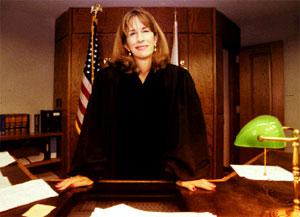
That was Judge Altonaga responding to a question from a student at her former school. The Herald has the nice story about her return to the school here:
The first Cuban-American woman ever appointed to a U.S. federal court bench said studying at Notre Dame Academy in Miami taught her the meaning of tolerance. It was the end of 1970s, one of the most tumultuous periods of racial discontent in Miami’s history. Her all-girls high school was one of the most racially integrated in the city. “I remember in my last year, coming back from a graduation night,” said Cecilia María Altonaga, who graduated in 1980.
“Our parents had to pick us up from the school, and the riots were going on at the same time. The school was closed. It was dangerous.” There were no final exams that year, due to the violence. But inside the school, a different story about race was unfolding. “This was a place that exhibited all these different racial/ethnic groups coexisting, working together, overcoming differences,” said Altonaga. “There is this perception that all Catholic girls schools are elitist or homogenous or they exclude people. This was quite the opposite, one of the most diverse groups of young women working together.”
She returned to her alma mater — which soon after she graduated merged with Archbishop Curley High School — on Saturday to talk about her career in the law to about two dozen current students. The forum followed a special Mass at the Archbiship Curley-Notre Dame High School, which each year honors an alum who now serves the community as an attorney or judge.
Saturday, April 02, 2011
How much does it cost to retrofit a courtroom?
Judge Jordan is in a long securities fraud trial right now. But that's nothing compared to what he has coming up with the Mutual Benefits case, which is expected to last 8 months. Now, the government has asked to retrofit a courtroom to allow for two juries to preside at the same time because of severance issues. I feel for Judge Jordan on this case.
Friday, April 01, 2011
Reading Administrative Orders on Friday Afternoon
Yes, the exciting life of a federal blogger. (Rumpole, on the other hand, is posting April Fools jokes).
Well, I'm sure you've been waiting on the edge of your seats to find out about the new magistrate pairings. Here they are!
And Judge Torres is up for re-appointment.
Need to have more .... Click here.
Well, I'm sure you've been waiting on the edge of your seats to find out about the new magistrate pairings. Here they are!
And Judge Torres is up for re-appointment.
Need to have more .... Click here.
Thursday, March 31, 2011
Quick hits
1. SFL covers Minkow. So does Curt Anderson.
2. The border search exception applies to laptops, even if they take it to a facility 170 miles away.
3. No 11th Circuit en banc review for the health care case.
4. The Bronx Zoo Cobra was caught.
5. Well, if Dr. Drew thinks the airport scans are fine, then I'm sure they are.
2. The border search exception applies to laptops, even if they take it to a facility 170 miles away.
3. No 11th Circuit en banc review for the health care case.
4. The Bronx Zoo Cobra was caught.
5. Well, if Dr. Drew thinks the airport scans are fine, then I'm sure they are.
Wednesday, March 30, 2011
Former U.S. Attorney Alex Acosta writes letter about Jeffrey Epstein deal and Roy Black responds
Wow, this is getting ugly.
The Daily Beast broke the story here.
And one of Epstein's lawyers, Roy Black, has responded to Acosta's letter (page 1, and page 2, and page 3 here) in the Palm Beach Daily News.
Both letters are truly remarkable, and I've never seen anything like it. From the PBDN:
Attorney Roy Black is disputing claims that he, and other attorneys representing Jeffrey Epstein, pried into federal prosecutors’ personal lives in attempting to disqualify them from investigating the billionaire sex offender. Black also denies Epstein’s attorneys “negotiated in bad faith,” while attempting to reach an agreement with federal prosecutors. *** According to Acosta, now dean of the Florida International University College of Law, federal prosecutors and agents met with Black in the summer of 2007. The prosecutors presented Epstein a choice: plead guilty to state felony charges resulting in two years imprisonment, registration as a sex offender and restitution for the victims or prepare for a federal felony trial. What followed, Acosta said, was that Epstein’s defense team launched “a yearlong assault on the prosecution and the prosecutors. “I use the word assault intentionally, as the defense in this case was more aggressive than any which I, or the prosecutors in my office, had previously encountered,” Acosta said in his letter. Among the “legal superstars” on Epstein’s defense team: Harvard professor Alan Dershowitz, Kenneth Starr, Jay Lefkowitz and several others, including prosecutors who had formally worked in the U.S. Attorney’s Office and in the Child Exploitation and Obscenity Section of the Justice Department. Acosta said that one member of the defense team warned him “the office’s excess zeal in forcing a good man to serve time in jail might be the subject of a book if we continued to proceed with this matter.” Black said he’s never heard anyone mention writing a book about the Epstein case. “Mr. Acosta claims we negotiated in bad faith by appealing to the Department of Justice in Washington,” Black said. “Any person under investigation by a United States attorney, meaning any of the 94 such offices in the country, has the right to seek review by the Department of Justice and it is so provided for in their manual. Thus I cannot imagine invoking this right could be construed as bad faith. “In our system of justice, people are given the right of appeal and there should be no implication of wrong doing by exercising it. “Finally Mr. Acosta mentions we looked for personal peccadilloes of prosecutors,” Black said. “I am not sure what he refers to but this never happened. We did point out misconduct and over-reaching by certain people involved in the investigation. Not only is there nothing wrong with this but it is a necessary part of the process. There will always be people who abuse the great power of the government and we can not stand by silently when it occurs.”
The Daily Beast broke the story here.
And one of Epstein's lawyers, Roy Black, has responded to Acosta's letter (page 1, and page 2, and page 3 here) in the Palm Beach Daily News.


Both letters are truly remarkable, and I've never seen anything like it. From the PBDN:
Attorney Roy Black is disputing claims that he, and other attorneys representing Jeffrey Epstein, pried into federal prosecutors’ personal lives in attempting to disqualify them from investigating the billionaire sex offender. Black also denies Epstein’s attorneys “negotiated in bad faith,” while attempting to reach an agreement with federal prosecutors. *** According to Acosta, now dean of the Florida International University College of Law, federal prosecutors and agents met with Black in the summer of 2007. The prosecutors presented Epstein a choice: plead guilty to state felony charges resulting in two years imprisonment, registration as a sex offender and restitution for the victims or prepare for a federal felony trial. What followed, Acosta said, was that Epstein’s defense team launched “a yearlong assault on the prosecution and the prosecutors. “I use the word assault intentionally, as the defense in this case was more aggressive than any which I, or the prosecutors in my office, had previously encountered,” Acosta said in his letter. Among the “legal superstars” on Epstein’s defense team: Harvard professor Alan Dershowitz, Kenneth Starr, Jay Lefkowitz and several others, including prosecutors who had formally worked in the U.S. Attorney’s Office and in the Child Exploitation and Obscenity Section of the Justice Department. Acosta said that one member of the defense team warned him “the office’s excess zeal in forcing a good man to serve time in jail might be the subject of a book if we continued to proceed with this matter.” Black said he’s never heard anyone mention writing a book about the Epstein case. “Mr. Acosta claims we negotiated in bad faith by appealing to the Department of Justice in Washington,” Black said. “Any person under investigation by a United States attorney, meaning any of the 94 such offices in the country, has the right to seek review by the Department of Justice and it is so provided for in their manual. Thus I cannot imagine invoking this right could be construed as bad faith. “In our system of justice, people are given the right of appeal and there should be no implication of wrong doing by exercising it. “Finally Mr. Acosta mentions we looked for personal peccadilloes of prosecutors,” Black said. “I am not sure what he refers to but this never happened. We did point out misconduct and over-reaching by certain people involved in the investigation. Not only is there nothing wrong with this but it is a necessary part of the process. There will always be people who abuse the great power of the government and we can not stand by silently when it occurs.”
Justice Scalia gets ticket in car accident
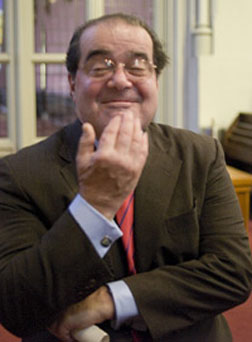
Apparently he was following a little too closely to the car in front of him:
The accident happened just before 9 a.m. on what was to be a big day for the jurist: The nation’s highest court was hearing arguments in the massive Wal-Mart gender discrimination case. According to U.S. Park Police, Scalia was driving south on the parkway approaching Roosevelt Bridge when he rear-ended a car that had stopped for traffic, triggering a chain reaction. Brooke Salkoff saw it all go down. The former NBC reporter told us she was just behind Scalia’s vehicle, a shiny black BMW in the left lane. “It slammed into the car in front of his, which pushed the other two forward,” and caused them all to skew into the right lane, she said. Now, just as when you're in a fancy restaurant and everyone turns their head to see who walked in, it’s only natural that everyone driving along a major commuter route out of McLean would want to rubberneck at something like this. Salkoff did, as her car inched past, and was rewarded by a surprising glimpse of a familiar face. Scalia was in a dress shirt, no jacket, with an unknotted bowtie hanging around his neck — and, interestingly enough, turned out to be driving himself. The car in front of his appeared pretty badly banged up, the other two less so. Scalia made it to the bench, though, in time for arguments at 10 a.m., a court spokeswoman said. No doubt in Salkoff’s mind that Scalia was at fault, as the driver who failed to brake. “I think that’s an originalist interpretation,” she quipped. Indeed, said the Park Police’s Sgt. David Schlosser, the justice got a ticket for following too closely. Fine: $70, plus a $20 special assessment, or, said Schlosser, “he can contest it in court.”
I volunteer to represent him for free.
Tuesday, March 29, 2011
Unbelievable
5-4 per Justice Thomas in Connick v. Thompson:
Held: A district attorney’s office may not be held liable under §1983 for failure to train its prosecutors based on a single Brady violation.
One reason given is that lawyers learn enough about Brady from law school and the bar exam. Justice Ginsburg for the dissenters rightfully blasts this: The Court nevertheless holds Canton’s example inapposite. It maintains that professional obligations, ethics rules, and training—including on-the-job training—set attorneys apart from other municipal employees, includingrookie police officers. Ante, at 12–15. Connick “had every incentive at trial to attempt to establish” that he could reasonably rely on the professional education and status of his staff. Cf. ante, at 10, n. 6. But the jury heard and rejected his argument to that effect. Tr. 364, 576–577, 834–835.
The Court advances Connick’s argument with greater clarity, but with no greater support. On what basis can one be confident that law schools acquaint students with prosecutors’ unique obligation under Brady? Whittaker told the jury he did not recall covering Brady in his criminal procedure class in law school. Tr. 335. Dubelier’s alma mater, like most other law faculties, does not make criminal procedure a required course. Connick suggested that the bar examination ensures that new attorneys will know what Brady demands. Tr. 835. Research indicates, however, that from 1980 to the present, Brady questions have not accounted for even 10% of the total points in the criminal law and procedure section of any administration of the Louisiana Bar Examination. A person sitting for the Louisiana Bar Examination, moreover, need pass only five of the exam’s nine sections.23 One can qualify for admission to the professionwith no showing of even passing knowledge of criminal law and procedure.
The majority’s suggestion that lawyers do not need Brady training because they “are equipped with the tools to find, interpret, and apply legal principles,” ante, at 17– 18, “blinks reality” and is belied by the facts of this case. See Brief for Former Federal Civil Rights Officials and Prosecutors as Amici Curiae 13. Connick himself recog-nized that his prosecutors, because of their inexperience, were not so equipped. Indeed, “understanding and com-plying with Brady obligations are not easy tasks, and theappropriate way to resolve Brady issues is not always self-evident.” Brief for Former Federal Civil Rights Officials and Prosecutors as Amici Curiae 6. “Brady compliance,”therefore, “is too much at risk, and too fundamental to the fairness of our criminal justice system, to be taken for granted,” and “training remains critical.” Id., at 3, 7.
Here's the AP article.
Held: A district attorney’s office may not be held liable under §1983 for failure to train its prosecutors based on a single Brady violation.
One reason given is that lawyers learn enough about Brady from law school and the bar exam. Justice Ginsburg for the dissenters rightfully blasts this: The Court nevertheless holds Canton’s example inapposite. It maintains that professional obligations, ethics rules, and training—including on-the-job training—set attorneys apart from other municipal employees, includingrookie police officers. Ante, at 12–15. Connick “had every incentive at trial to attempt to establish” that he could reasonably rely on the professional education and status of his staff. Cf. ante, at 10, n. 6. But the jury heard and rejected his argument to that effect. Tr. 364, 576–577, 834–835.
The Court advances Connick’s argument with greater clarity, but with no greater support. On what basis can one be confident that law schools acquaint students with prosecutors’ unique obligation under Brady? Whittaker told the jury he did not recall covering Brady in his criminal procedure class in law school. Tr. 335. Dubelier’s alma mater, like most other law faculties, does not make criminal procedure a required course. Connick suggested that the bar examination ensures that new attorneys will know what Brady demands. Tr. 835. Research indicates, however, that from 1980 to the present, Brady questions have not accounted for even 10% of the total points in the criminal law and procedure section of any administration of the Louisiana Bar Examination. A person sitting for the Louisiana Bar Examination, moreover, need pass only five of the exam’s nine sections.23 One can qualify for admission to the professionwith no showing of even passing knowledge of criminal law and procedure.
The majority’s suggestion that lawyers do not need Brady training because they “are equipped with the tools to find, interpret, and apply legal principles,” ante, at 17– 18, “blinks reality” and is belied by the facts of this case. See Brief for Former Federal Civil Rights Officials and Prosecutors as Amici Curiae 13. Connick himself recog-nized that his prosecutors, because of their inexperience, were not so equipped. Indeed, “understanding and com-plying with Brady obligations are not easy tasks, and theappropriate way to resolve Brady issues is not always self-evident.” Brief for Former Federal Civil Rights Officials and Prosecutors as Amici Curiae 6. “Brady compliance,”therefore, “is too much at risk, and too fundamental to the fairness of our criminal justice system, to be taken for granted,” and “training remains critical.” Id., at 3, 7.
Here's the AP article.
Only in Miami
I just love these only in Miami stories about the Jose Canseco having his twin brother Ozzie standing in for him at a celebrity fight and about Luke Campbell running for mayor.


If you want to stick to the regular federal news, well then here's a story for you about why it's so difficult to get a cellphone into the courthouse.
Monday, March 28, 2011
Ft. Lauderale federal courthouse described as "worst" by "federal officials"
The Sun-Sentinel has the story of renewed plans to build a new federal courthouse in Broward:
Broward County could get two new courthouses on the New River in downtown Fort Lauderdale instead of just one — a potential government investment of at least $500 million. A high-powered task force of federal judges, lawyers and politicians has revived a dormant proposal to build a new federal courthouse. They have their eyes on Broward County's waterfront land for a federal-county court campus next to the riverfront jail. Broward County commissioners voted last year to build a $328 million county courthouse on the existing county court site, south of the river, just west of Third Avenue. The new federal courthouse would go somewhere nearby, on that same block of county land.
***
Federal officials decided years ago to replace the existing federal courthouse, which sits on Broward Boulevard, abutting Third Avenue. Since the terrorist attacks of Sept. 11, 2001, federal buildings must have safety buffers at least 100 feet wide — a requirement the existing courthouse doesn't meet. It's also woefully small, officials complain, and was described by federal officials on a recent visit as "the worst that they have encountered,'' according to a March 15 task force memo written by Scherer. Fort Lauderdale "has moved to the 8th position on a list of 100 communities needing a new federal courthouse,'' Scherer's memo said. That would put it in line for possible funding in the 2016-2018 timeframe, unless it can be bumped up, as the task force hopes. The group also believes building a joint project could reduce costs, with both courthouses benefiting from the same security and roadway work.
Broward County could get two new courthouses on the New River in downtown Fort Lauderdale instead of just one — a potential government investment of at least $500 million. A high-powered task force of federal judges, lawyers and politicians has revived a dormant proposal to build a new federal courthouse. They have their eyes on Broward County's waterfront land for a federal-county court campus next to the riverfront jail. Broward County commissioners voted last year to build a $328 million county courthouse on the existing county court site, south of the river, just west of Third Avenue. The new federal courthouse would go somewhere nearby, on that same block of county land.
***
Federal officials decided years ago to replace the existing federal courthouse, which sits on Broward Boulevard, abutting Third Avenue. Since the terrorist attacks of Sept. 11, 2001, federal buildings must have safety buffers at least 100 feet wide — a requirement the existing courthouse doesn't meet. It's also woefully small, officials complain, and was described by federal officials on a recent visit as "the worst that they have encountered,'' according to a March 15 task force memo written by Scherer. Fort Lauderdale "has moved to the 8th position on a list of 100 communities needing a new federal courthouse,'' Scherer's memo said. That would put it in line for possible funding in the 2016-2018 timeframe, unless it can be bumped up, as the task force hopes. The group also believes building a joint project could reduce costs, with both courthouses benefiting from the same security and roadway work.
Sunday, March 27, 2011
Pictures from Friday's event
SFL posted some of my amateur cell phone pictures over at his blog, but Judge Scott Silverman took some great shots:




Okay, Judge Silverman didn't take the Paris Hilton/Lindsay Lohan picture, but both panels discussed them. See what you missed.
Friday, March 25, 2011
Friday afternoon quick hits
1. The symposium was really interesting, especially Rumpole and SFL trying to partipicate by speaker phone and Twitter.
2. Another book on legal writing. I disagree with Russ Guberman's point here:
Has legal writing changed over the years? And if so, for the better or for the worse?
I hate to mythologize the past, but legal writing is changing for the worse. The advent of technology has ushered in an era of cutting-and-pasting that makes the finished product often read like a patchwork quilt, or as what Judge Ruggero Aldisert famously called a “promiscuous uttering of citations.”
3. Via How Appealing, the D.C. Circuit takes another shot at the 4th Amendment here:
"We conclude it was not clearly established in 2002 that the strip search of a person being introduced into a detention facility violated the Fourth Amendment."
Judge Judith Rogers dissented: "This is the first time a circuit court of appeals has suggested that the protections of the Fourth Amendment to the Constitution against unreasonable searches do not extend to an individual arrested for a non-violent minor offense who is awaiting arraignment apart from the general population of detainees, and is subjected to a strip search in the absence of reasonable suspicion he is hiding contraband or weapons."
I'm out. Have a nice weekend.
2. Another book on legal writing. I disagree with Russ Guberman's point here:
Has legal writing changed over the years? And if so, for the better or for the worse?
I hate to mythologize the past, but legal writing is changing for the worse. The advent of technology has ushered in an era of cutting-and-pasting that makes the finished product often read like a patchwork quilt, or as what Judge Ruggero Aldisert famously called a “promiscuous uttering of citations.”
3. Via How Appealing, the D.C. Circuit takes another shot at the 4th Amendment here:
"We conclude it was not clearly established in 2002 that the strip search of a person being introduced into a detention facility violated the Fourth Amendment."
Judge Judith Rogers dissented: "This is the first time a circuit court of appeals has suggested that the protections of the Fourth Amendment to the Constitution against unreasonable searches do not extend to an individual arrested for a non-violent minor offense who is awaiting arraignment apart from the general population of detainees, and is subjected to a strip search in the absence of reasonable suspicion he is hiding contraband or weapons."
I'm out. Have a nice weekend.
Thursday, March 24, 2011
Historical Society Centennial Symposium
Tim Ravich and Robert Kuntz are putting on a symposium tomorrow titled: "The Vital, Tempestuous and Changing Relationship Between the Court and Media." It's in Courtroom 4-2 of the Miami-Dade County Courthouse, starting at 8:30 -- 12:15. Speakers include Roy Black, John Hogan, Kendall Coffee, Brian Tannebaum, Robert Levenson, Joe Serota, Mark Seigan, Rumpole, SFL, Eddie Dominguez, and yours truly.
Here is how the event is described:
Throughout its long history, the 11th Judicial Circuit has hosted countless high profile cases. This three part, half-day symposium will showcase some of those trials that have impacted our community, and at times, our nation.
Part I – A 45-minute multi-media historical presentation by the 11th Judicial Circuit’s Court Historian Judge Scott J. Silverman. This presentation will focus on executions of convicted criminal defendants in Dade County between 1901 and 1917, and Giuseppe Zangara’s attempted assassination of President-Elect Franklin D. Roosevelt at Miami’s Bayfront Park in February 1930.
Part II - This portion of the symposium consists of a panel discussion of the William Lozano shooting of Clement Lloyd, the 1989 Miami riots, and Lozano’s 1993 re-trail.
Part III – The aspect of the symposium will conclude with a 1-hour panel discussion of the role the media in the courtroom. The discussion will include blogging, twitter, email, cameras in the courtroom, and feeding the 24-hour news cycle.
Here is how the event is described:
Throughout its long history, the 11th Judicial Circuit has hosted countless high profile cases. This three part, half-day symposium will showcase some of those trials that have impacted our community, and at times, our nation.
Part I – A 45-minute multi-media historical presentation by the 11th Judicial Circuit’s Court Historian Judge Scott J. Silverman. This presentation will focus on executions of convicted criminal defendants in Dade County between 1901 and 1917, and Giuseppe Zangara’s attempted assassination of President-Elect Franklin D. Roosevelt at Miami’s Bayfront Park in February 1930.
Part II - This portion of the symposium consists of a panel discussion of the William Lozano shooting of Clement Lloyd, the 1989 Miami riots, and Lozano’s 1993 re-trail.
Part III – The aspect of the symposium will conclude with a 1-hour panel discussion of the role the media in the courtroom. The discussion will include blogging, twitter, email, cameras in the courtroom, and feeding the 24-hour news cycle.
Tuesday, March 22, 2011
Talented economic crimes prosecutors leaving USAO (UPDATED)

Three of them that I know about:
Jeffrey Neiman (pictured), who is one of the leading tax prosecutors in the country, and was part of the UBS team, is starting his own firm and will be sharing space with Fred Hadaad in Broward.
Ryan Stumphauzer, who is the Deputy Chief of Economic Crimes and the Health Care Fraud Coordinator, and Ryan O'Quinn, who was Senior Counsel at the SEC and is now a securities prosecutor, are forming a partnership and will be practicing in Miami.
Three good guys. I'm sure this is going to be tough on the economic crimes section.
UPDATED -- I forgot to mention Andy Levi who recently left the economics crimes division as well, and is now at Nardello as "head of the Miami office."
Levi and O'Quinn were running the Mutual Benefits case (the expected 8 month trial before Judge Jordan), so it will be interesting to see what happens there.
Monday, March 21, 2011
"Why don’t we just abolish the exclusionary rule? That would be really simple. Whatever evidence tends to prove the truth comes in.”
Uh-oh. That was Justice Scalia this morning in Davis v. United States:
JUSTICE SCALIA: Actually, why don't we just abolish the exclusionary rule? That would be really simple. Whatever evidence tends to prove the truth comes in. That would be a very simple system if we're looking for just simplicity, wouldn't it?
MR. DREEBEN: It would be an extremely simple system.
JUSTICE SCALIA: You're not proposing that, though?
MR. DREEBEN: Not in this case, because this case represents only an application of existing doctrine in the Court with respect to the purposes of the exclusionary rule.
As much as Scalia is the best friend of criminal defendants in 6th Amendment and sentencing cases, he is no friend of the 4th Amendment.
Volokh conspirator Orin Kerr argued for Mr. Davis in a case out of the 11th Circuit, and definitely held his own in a very difficult case. According to ScotusBlog:
Kerr, asking the Court to avoid simple labels, said the main problem with expanding the “good faith” exception so as to allow police to rely on Circuit Court precedent was that it would compromise the effect of the later Supreme Court ruling rejecting that precedent. Lawyers, the professor contended, would be discouraged from taking test cases to the Supreme Court to try to get new rules of Fourth Amendment law if it turned out that their client could not benefit from it: as soon as they asked for a new rule, the prosecution would counter that the “good faith” exception would take hold, and the client would lose anyway — even while winning on the constitutional point. That scenario, Kerr said, would mean the Supreme Court was merely issuing “advisory opinions,” and defense lawyers would see no reason to go for such unhelpful results.
The whole transcript is here. It's an interesting read.
In other SCOTUS news, the 9th Circuit got slapped. The LA Times:
The U.S. Supreme Court reinstated a Sacramento man's conviction and life sentence Monday for the rape of a 72-year-old woman in her apartment, dismissing an appellate court's decision that the prosecutor may have had racial reasons for removing two African Americans from the jury.
The Ninth U.S. Circuit Court of Appeals in San Francisco had granted a new trial to Steven Frank Jackson in July. The court said the prosecutor at Jackson's 2004 trial had used pretexts to justify his challenges to the two African American jurors, because the reasons he gave could have applied to jurors he left on the panel.
The Supreme Court, in a unanimous ruling, called the appeals court decision "inexplicable." The appellate judges should have deferred to state court rulings that upheld the prosecutor's explanations, the high court said.
***
"There was simply no basis for the Ninth Circuit to reach the opposite conclusion, particularly in such a dismissive manner," the court said.
Yikes.
While we're on the Supreme Court, it granted cert today in a sad case from the 11th, Maples v. Alabama. The issue: Whether the Eleventh Circuit properly held that there was no “cause” to excuse any procedural default where petitioner was blameless for the default, the state's own conduct contributed to the default, and petitioner's attorneys of record were no longer functioning as his agents at the time of any default.
Pretty crazy what happened in the case -- a death-row inmate missed a filing deadline that he never knew about because a BigLaw mailroom clerk messed up. The 11th Circuit said the Alabama courts were correct to procedurally default Maples, saying that finality wins out. Off you go to get your needle. No joke. Judge Barkett dissented and the Supremes took cert. (Judge Barkett's dissents are paying off). Here is the NY Times coverage of the case after former SG Gregory Garre of Latham & Watkins filed the cert petition.
Full disclosure -- I worked on the NACDL amicus brief filed in the 11th Circuit. Lisa Blatt of Arnold & Porter wrote excellent amicus briefs in the case.
UPDATED -- The New York Times covers the grant here. This is shocking to me: Troy King, Alabama’s attorney general, wrote that Mr. Maples had been represented by “a team of attorneys from a multimillion-dollar law firm” who should know that rules are rules.
“Filing deadlines apply to death row inmates,” Mr. King wrote. “Countless attorneys have missed filing deadlines over the years, and state and federal courts routinely dismissed their client’s tardy appeal as a consequence. This case is no different, and it presents nothing new or nationally compelling.”
JUSTICE SCALIA: Actually, why don't we just abolish the exclusionary rule? That would be really simple. Whatever evidence tends to prove the truth comes in. That would be a very simple system if we're looking for just simplicity, wouldn't it?
MR. DREEBEN: It would be an extremely simple system.
JUSTICE SCALIA: You're not proposing that, though?
MR. DREEBEN: Not in this case, because this case represents only an application of existing doctrine in the Court with respect to the purposes of the exclusionary rule.
As much as Scalia is the best friend of criminal defendants in 6th Amendment and sentencing cases, he is no friend of the 4th Amendment.
Volokh conspirator Orin Kerr argued for Mr. Davis in a case out of the 11th Circuit, and definitely held his own in a very difficult case. According to ScotusBlog:
Kerr, asking the Court to avoid simple labels, said the main problem with expanding the “good faith” exception so as to allow police to rely on Circuit Court precedent was that it would compromise the effect of the later Supreme Court ruling rejecting that precedent. Lawyers, the professor contended, would be discouraged from taking test cases to the Supreme Court to try to get new rules of Fourth Amendment law if it turned out that their client could not benefit from it: as soon as they asked for a new rule, the prosecution would counter that the “good faith” exception would take hold, and the client would lose anyway — even while winning on the constitutional point. That scenario, Kerr said, would mean the Supreme Court was merely issuing “advisory opinions,” and defense lawyers would see no reason to go for such unhelpful results.
The whole transcript is here. It's an interesting read.
In other SCOTUS news, the 9th Circuit got slapped. The LA Times:
The U.S. Supreme Court reinstated a Sacramento man's conviction and life sentence Monday for the rape of a 72-year-old woman in her apartment, dismissing an appellate court's decision that the prosecutor may have had racial reasons for removing two African Americans from the jury.
The Ninth U.S. Circuit Court of Appeals in San Francisco had granted a new trial to Steven Frank Jackson in July. The court said the prosecutor at Jackson's 2004 trial had used pretexts to justify his challenges to the two African American jurors, because the reasons he gave could have applied to jurors he left on the panel.
The Supreme Court, in a unanimous ruling, called the appeals court decision "inexplicable." The appellate judges should have deferred to state court rulings that upheld the prosecutor's explanations, the high court said.
***
"There was simply no basis for the Ninth Circuit to reach the opposite conclusion, particularly in such a dismissive manner," the court said.
Yikes.
While we're on the Supreme Court, it granted cert today in a sad case from the 11th, Maples v. Alabama. The issue: Whether the Eleventh Circuit properly held that there was no “cause” to excuse any procedural default where petitioner was blameless for the default, the state's own conduct contributed to the default, and petitioner's attorneys of record were no longer functioning as his agents at the time of any default.
Pretty crazy what happened in the case -- a death-row inmate missed a filing deadline that he never knew about because a BigLaw mailroom clerk messed up. The 11th Circuit said the Alabama courts were correct to procedurally default Maples, saying that finality wins out. Off you go to get your needle. No joke. Judge Barkett dissented and the Supremes took cert. (Judge Barkett's dissents are paying off). Here is the NY Times coverage of the case after former SG Gregory Garre of Latham & Watkins filed the cert petition.
Full disclosure -- I worked on the NACDL amicus brief filed in the 11th Circuit. Lisa Blatt of Arnold & Porter wrote excellent amicus briefs in the case.
UPDATED -- The New York Times covers the grant here. This is shocking to me: Troy King, Alabama’s attorney general, wrote that Mr. Maples had been represented by “a team of attorneys from a multimillion-dollar law firm” who should know that rules are rules.
“Filing deadlines apply to death row inmates,” Mr. King wrote. “Countless attorneys have missed filing deadlines over the years, and state and federal courts routinely dismissed their client’s tardy appeal as a consequence. This case is no different, and it presents nothing new or nationally compelling.”
Um, no different?! A man's life is on the line. Jeez.
Subscribe to:
Posts (Atom)