Wednesday, April 17, 2013

Reality Steve cites to the SDFLA Blog

Well, now the blog has officially made it.  Yes, links from Above the Law and How Appealing are nice, but now we've been cited to on Reality Steve:

Let me first confirm two more contestants for you. The first guy was really the only bit of info I’ve tweeted out in the last two weeks. I tweeted him out last Wednesday right before I left for California.
_________________________________________________________

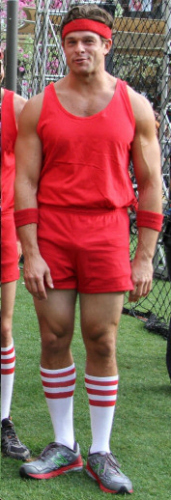
14. Mike Garofola: 31 or 32, Florida, Assistant United States Attorney. I first tweeted him out last Wednesday before I left for California once I was notified this blogger had posted him. So a big thanks to David Oscar Markus on that one. He’s one of the two unidentified guys on the red team during the dodgeball date.

In other news, Hafiz Khan is seeking a new trial based on Curt Anderson's story about the snitch.  Curt Anderson covers the story about his story:

A Muslim cleric convicted of terrorism support charges for sending thousands of dollars to the Pakistani Taliban is seeking a new trial, partly because of an Associated Press interview with the key FBI informant, according to documents filed in federal court.
The attorney for 77-year-old Hafiz Khan said in the motion filed Monday that the informant provided previously undisclosed information in the March 8 interview with the AP. Informant David Mahmood Siddiqui gave the interview describing his work for the FBI a few days after a jury convicted Khan of four terrorism support-related charges.
Khan's attorney, Khurrum Wahid, said in the documents that examples of new material include the length of time Siddiqui worked on the case and details about his perilous fall 2010 undercover trip to Pakistan's Swat Valley to meet people the FBI suspected were Taliban operatives financed by Khan.
"Mr. Khan was unaware of the information that came to light only when the informant Siddiqui spoke to the press after the verdict," Wahid wrote. "This information should have been disclosed."

Tuesday, April 16, 2013

Obama nominates Judge Bill Pryor to Sentencing Commission

From the Montgomery Advertiser:

President Barack Obama nominated former Alabama attorney general and current U.S. circuit judge Bill Pryor to be a commissioner on the U.S. Sentencing Commission, the White House announced Monday evening.
Pryor, who served as attorney general from 1997 to 2004, serves on the U.S. Court of Appeals for the 11th Circuit. President George W. Bush appointed Pryor to the federal bench in 2004.
The sentencing commission, according to its website, is an independent agency within the judicial branch that was set up to establish guidelines and practices for sentencing in federal courts, to assist Congress in developing policy related to crime, and to analyze and research issues related to federal crime and sentencing.
Pryor would serve a term that expires Oct. 31, 2017, and would replace commissioner William B. Carr, whose term has expired.
Obama also intends to nominate Rachel Elise Barkow, the Segal Family Professor of Regulatory Law and Policy at the New York University School of Law, and U.S. District Judge Charles Breyer of the Northern District of California to the sentencing commission, according to the White House.

Monday, April 15, 2013

Michael Caruso stepping up

The blog previously covered how sequestration was forcing the federal defenders to be furloughed every Friday for the rest of the year, resulting in a 20% pay cut.  Really horrible.  The Sun-Sentinel has picked up the story and discusses how the bosses at the FPD's office are really stepping up:

They say good bosses never ask employees to do something they wouldn't do themselves – even in a federal budget crisis.
The sequester has forced the Federal Public Defender's Office to close on Fridays because of employee furloughs.
But low-income people still get arrested, so the top boss in the office – the appointed Federal Public Defender Michael Caruso – has been personally handling Friday magistrate court duty in Miami while supervisors Robert Berube and Peter Birch represent inmates in Fort Lauderdale and West Palm Beach.

Friday, April 12, 2013

Congrats to Chief Judge Moreno

The Notre Dame Law Association has awarded Chief Judge Federico Moreno with its St. Thomas More award:


The Notre Dame Law Association will award the St. Thomas More Award to the Hon. Federico A. Moreno (A.B. ’74) on April 12, 2013.
Judge Moreno was born in 1952 in Venezuela, and received his A.B. from Notre Dame, cum laude, in 1974. After graduation, he worked briefly as a teacher and then attended the University of Miami Law School, from which he received his J.D. in 1978.After law school, Judge Moreno was in private practice, and served indigent clients while employed by the Federal Public Defender’s Office in Miami. In 1986, Judge Moreno was appointed to the Dade County Court bench and then to the Circuit Court a year later. President George H. W. Bush appointed Judge Moreno in 1990 to the United States District Court for the Southern District of Florida. He currently serves as Chief Judge for one of the largest federal courts in the country.
Judge Moreno served on the boards of Legal Services of Greater Miami, the Cuban American Bar Association’s Pro Bono Program, and the United Way. He received the Pro Bono Service Award of the Cuban American Bar Association and the United Way’s “People Helping People” Award. His activities also include the membership in the Notre Dame Club of Miami and the University of Miami Law School Alumni, of which he was a Director.
Federico Moreno has been married for 35 years to his wife, Cris. They have three children: Cristi, who graduated from Notre Dame Law School and is currently an Assistant U.S. Attorney; Ricki, who graduated from Notre Dame with a degree in accounting and received his MBA from Wharton; and Victoria, who is in her senior year at Notre Dame.
The St. Thomas More Award honors graduates of the University of Notre Dame “who have distinguished themselves as jurists or public servants, while exhibiting uncompromising integrity and loyalty to conscience.”
Since instituted by the Notre Dame Law Association in 2000, the award has been presented two other times: to Rev. Theodore Hesburgh, C.S.C., in 2004, and to Dean Patricia A. O’Hara in 2009.
  
Congrats!

Thursday, April 11, 2013

Thursday news & notes

1.  While one prosecutor is appearing on The Bachelorette, another is writing op-eds for the Wall Street Journal saying that the feds should have the right to search everything, including your computer and phone, are the border.  I'll leave it to you all to decide which is worse. 

2.  Sri to the Supremes? (via the New Yorker)

3. Seems unlikely because Obama is still not doing a good job with his judicial appointments.  How long has Will Thomas been waiting now?  (via NY Times)

Of 856 federal district and circuit court seats, 85 are unfilled — a 10 percent vacancy rate and nearly double the rate at this point in the presidency ofGeorge W. Bush. More than a third of the vacancies have been declared “judicial emergencies” based on court workloads and the length of time the seats have been empty. By far the most important cause of this unfortunate state of affairs is the determination of Senate Republicans, for reasons of politics, ideology and spite, to confirm as few ofPresident Obama’s judicial choices as possible.
Numbers compiled by the Senate Judiciary Committee tell the story. Mr. Obama’s nominees for seats on federal courts of appeal, the system’s top tier below the Supreme Court, have waited an average of 148 days for their confirmation vote following the committee’s approval, more than four times longer than Mr. Bush’s nominees. For Mr. Obama’s nominees to federal district courts, the average wait time has been 102 days, compared with 35 days for Mr. Bush’s district court choices.

4.  Too many lawyers in Miami.  Bennett County, South Dakota, not so much.  (via the NY Times)

5.  The Federal PD in Columbus, Ohio is resigning because of sequestration.  It's getting really bad.  (via NPR)

6.  Meantime, the DOJ is spending like crazy.  (via Politico)

Looking good for Hollywood: Tax dollars are also used at the department to help the entertainment industry. The FBI has its own Investigative Publicity and Public Affairs Unit, which is dedicated to helping Hollywood make movies and TV shows, including “The Kingdom,” “Fast and Furious 4,” “CSI,” “Numb3rs” and “Without a Trace.” This perk for Hollywood comes with an annual price tag of $1.5 million to the American taxpayer.
Meet and greets: In addition, the DOJ staff hosted numerous conferences around the country. In 2010 alone, the department spent nearly $100 million on conferences, which is twice what was spent two years earlier. This includes more than $600,000 in event-planner costs for five conferences, even though the need for this was not shown.

7.  According to this article by ProPublica, no one is policing prosecutorial misconduct, so it appears unlikely that they will care about the above spending.

8.  Finally, Justice Thomas said he didn't know it was news when he spoke at an oral argument recently.  Do you believe him?  (via Pittsburgh Post-Gazette)
Clarence Thomas, the U.S. Supreme Court justice who has become known for his silence from the bench during oral arguments, made national news a few months ago when he spoke, briefly.
So, on Tuesday, when he visited Duquesne University to speak, expansively, a law school student asked the obvious question -- what was Justice Thomas' philosophy about the role of justices in oral arguments?
"Well, first of all, my philosophy about the news is never watching it," Justice Thomas said, to applause and laughter, adding that it was the first he'd heard of the widespread notice given to the moment when, with just a few words, he broke his self-imposed seven-year silence during oral arguments.

Tuesday, April 09, 2013

Breaking -- Alicia Valle is your new Magistrate

Congrats to all around nice person and long time spokeswoman at the U.S. Attorney's Office Alicia Valle, who will be a great judge. 

I found this bio of her online
:

Alicia Olivera Valle has been the Special Counsel to the United States Attorney, Southern District of Florida, since May 2005.  In this capacity, Ms. Valle handles special case-related and other projects and all media for the U.S. Attorney.  Since joining the U.S. Attorney’s Office in 1987, she has successfully prosecuted various high-profile public corruption and white-collar criminal cases in New Jersey and Florida, including cases against the Mayor of Parsippany, the former Manager and Chief of Police for the City of Miami, and the President of the Miami-Dade teacher’s union, all on corruption charges.  During her tenure at the Miami U.S. Attorney’s Office, Ms. Valle has served as Executive Assistant U.S. Attorney, twice Chief of the Economic Crimes Section, and until her promotion to Special Counsel in 2005, as Chief of the Public Corruption Section.  Prior to joining the U.S. Attorney’s Office, Ms. Valle clerked for the Honorable Stewart G. Pollock of the Supreme Court of New Jersey.  She was also an associate with the law firm of Clapp & Eisenberg in Newark, New Jersey.  Ms. Valle received her undergraduate degree from Rutgers University and law degree from Harvard Law School.

Congrats again!

Tuesday news & notes

1.  John Pacenti covers the Kaley case going to the Supreme Court:

On the 50th anniversary of its landmark Gideon ruling giving all criminal defendants access to a lawyer, the U.S. Supreme Court accepted a South Florida case asking whether defendants are entitled to hire the counsel of their choice when federal prosecutors freeze their assets before trial.
The Supreme Court unanimously ruled in the 1963 case of Clarence Gideon, who received a five-year sentence for a pool room theft in Panama City, that state courts are required to provide free representation to indigent defendants under the 14th Amendment. The decision caused the release of 2,000 Florida prisoners.
Fifty years later, the high court agreed to decide whether the federal government can freeze a defendant's assets before trial without an evidentiary hearing.
"Gideon couldn't afford a lawyer, so the government said he had to go to trial without the court appointing one for him," said attorney Howard Srebnick. "Fifty years later, the federal government is now arguing that because court-appointed lawyers are available to indigent defendants, the government can restrain assets needed for counsel of choice without first having to prove to a judge that the government has the evidence and legal authority to justify the restraint."
Srebnick is the partner at Miami criminal defense firm Black, Srebnick, Kornspan & Stumpf. He has teamed up with Miami appellate attorney Richard Strafer in leading the charge for Kerri and Brian Kaley. ( Read Petition for Cert. Read brief.)

2.  Fane Lozman wins again, this time in the 11th Circuit:

 Two months after the U.S. Supreme Court handed Fane Lozman a huge victory in his long-running legal battle with Riviera Beach, another court on Monday paved the way for the fervent activist to seek millions from the city for his troubles.
The 11th Circuit Court of Appeals reinstated a 2008 lawsuit Lozman filed against the city, claiming it repeatedly violated his civil rights by hiring a private investigator to trail him, kicking him out of public meetings and, at one point, having him arrested when he refused to leave.
“Today felt just a tad lower than winning at the Supreme Court,” Lozman said shortly after the decision was announced. “The Supreme Court ruling was a 10. Today was a 9½.”
City officials didn’t return emails or phone calls for comment about their latest loss to the former Marine who became a thorn in their sides shortly after docking his unconventional floating home at the city marina in 2006. City hall was closed Monday as part of budget-cutting measures.
But, while the high court’s ruling may have stung more, the 11th Circuit’s could be more costly.
When the nation’s high court in January ruled that the city improperly used ancient maritime law to seize and ultimately destroy Lozman’s 60-foot two-story floating home, the possible damages were somewhat fixed. City officials were faced with the prospect of paying Lozman for the $167,000 he claims it would cost to replace his home, the $300,000 he spent for attorneys and an undetermined amount to reimburse him for the money he shelled out for living expenses after his home was destroyed.
However, he said, if he succeeds in proving that the city violated his constitutional rights, the damages could skyrocket.
“If I was the city, I’d be concerned,” he said. “That’s a seven-figure sum.”

Friday, April 05, 2013

"He's smart, witty, compassionate, good-looking, nice."

That's Chief Judge Federico Moreno about his former law clerk and current Bachelorette contestant Mike Garofola.

 Rafael Olmeda from The Sun-Sentinel has more in this article:

A graduate of the University of Notre Dame and Fordham Law School, Garofola worked at the firm of Davis Polk and Wardwell for two years before becoming a clerk with U.S. Chief District Court Judge Federico Moreno in Miami.
"He's smart, witty, compassionate, good-looking, nice," Moreno said Friday. "He's a great lawyer. He was a great clerk. And he's a great prosecutor."
Would Moreno let his daughter date Garofola? "I can't answer that!" the judge said. "My daughter knows him. And she's a federal prosecutor."
Moreno declined to say what he thought of Garofola's venture into reality television, reflecting that at age 60, the judge is not part of the show's target audience.

You gotta love Judge Moreno for being a good sport here. 

Friday wrap-up

Well, the blog was dominated this week with The Bachelorette post (which was updated with additional pictures), drawing links from Reality Steve, Above the Law and others.  Interestingly, a number of people emailed me criticizing me for posting it.  The guy is going on national television in prime time, so I'm not sure how posting about it on this blog is harmful to him or anyone else.

Speaking of dating, did you know that Justice O'Connor dated Justice Rehnquist in law school:

She also discussed dating William Rehnquist while at Stanford Law School. "He was fun. We had good times." As for Byron White, O'Connor said, "I thought I was going to die" the first time she experienced his iron-grip handshake.
Then it was time to sign books, which O'Connor said she would do "provided you bring me a glass of wine." Wine was brought and dozens of lawyers queued up with books in hand, good reviews or bad.


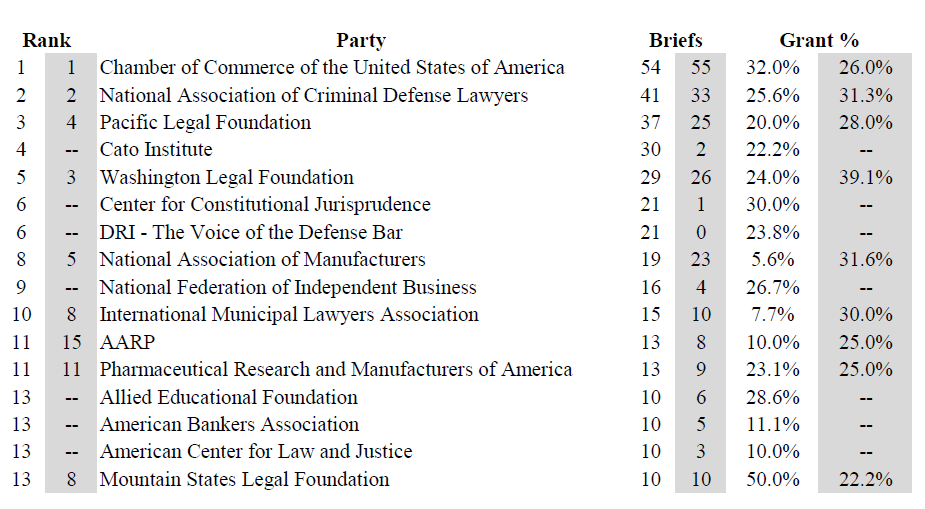
SCOTUSBlog has an interesting post on cert-stage amicus briefs and which ones are successful.  NACDL does an excellent job, but the Chamber of Commerce is the best:


Finally, it's furlough Friday, and the Federal Public Defender's office is closed.  But big ups to the Federal Defender himself, Michael Caruso, who is manning the fort in Magistrate Court today (and every Friday) making sure that newly arrested indigent defendants have counsel. 

Wednesday, April 03, 2013

Local AUSA Mike Garofola to be on The Bachelorette

Thanks to numerous tipsters, the buzz around the courthouse is now confirmed -- Assistant United States Attorney Mike Garofola will be a contestant on the new season of The Bachelorette.  He will be competing with two dozen other men for the love and affection of Desiree Hartsock.

He's used to competing, beating out hundreds of applicants for a federal clerkship and then a job at the United States Attorney's Office.  And as a trial lawyer, he's used to performing for an audience.  So he stands a good chance.

Here's a picture of AUSA Garofola from one of the upcoming episodes in which the contestants play dodgeball:


And here's Desiree:


I asked the U.S. Attorney's office for comment, and Alicia Valle on the office's behalf said: "We wish him luck."  I like that they were good sports about it.

UPDATE -- the initial post had his name misspelled.  It has been corrected, I hope.

UPDATE #2 -- some additional pictures of Mike:


Tuesday, April 02, 2013

Justice Scalia on childhood in NY


New York Magazine has an interesting series with people describing their childhood in New York.  Justice Scalia is one of them:

It is amazing how many of the names of the kids in this class I remember. The teacher standing in the back—that was a lady named Consuela Goins, and she was a wonderful teacher. Every cloud has a silver lining, and one of the benefits of the exclusion of women from most professions was that we had wonderful teachers, especially the women who today would probably be CEOs. My first crush was a girl in this class whose name was Theresa. She’s the one standing to the right of Mrs. Goins. She’s good-looking; I always had good taste. Hugh McGee was generally the class troublemaker—in the middle seat on the right, two girls behind him and two boys in front of him. He was a really smart student, but he was always getting into trouble.

Monday, April 01, 2013

April Fools

Hope everyone had a nice spring break.  Now back to business.

1.  Adam Liptak doesn't care for Justice O'Connor's book "Out of Order."  From Sunday's review:

The book is short and padded. The main part, only 165 pages long, is interrupted by stock photographs and curious, unexplained editorial cartoons. The Declaration of Independence and the Constitution are included in an appendix. They are surely worth rereading from time to time, but their main purpose here seems to be to add some bulk to a very skimpy effort.
The illustrations are particularly infuriating markers of missed opportunities. In one cartoon from 1981, the year O’Connor joined the court, the Rev. Jerry Falwell is seen on his knees, praying and crying, as she swings in what looks like one of the scales of justice. He is not mentioned in the text, and the reader is left to guess at what he is so worked up about. That he wants O’Connor to vote to strike down Roe v. Wade? (She was, as it turned out, an author of a 1992 joint opinion reaffirming its core, also not discussed in the book.) 
...
The larger problem is not that Justice O’Connor’s little sketches and lessons are wrong. Quite the contrary. The problem is that they are empty. She writes, correctly, that “the court’s only weapon is its moral authority.” But she refuses to give this and similar sentiments substance.
In retirement, she writes, she has “taken up the cause of promoting civics education in our nation’s schools.” But civics are just a skeleton. They need the flesh of argument to come to life, to have bite, to matter.
 2.  Tony Mauro says enough is enough and wants cameras in the High Court.  He is absolutely correct:

Inside the U.S. Supreme Court last week, the justices were doing what they do best: dissecting a difficult legal issue — this time same-sex marriage — in the intense back-and-forth of oral argument.
Over two illuminating mornings, the justices and top-notch advocates worked through most of the pros and cons of giving same-sex marriage constitutional protection — or instead letting the political process continue the debate.
Outside the court, however, the scene was less noble. People seeking seats for the oral arguments were forced to wait in line, with some arriving five days earlier. Tents were pitched, and money changed hands, with some paying as much as $6,000 to a line-waiting service for the chance of securing a seat inside. Inevitably things got messy, and the line seemed more befitting of a music hall or an Apple store on the eve of the release of a new iPhone.
In one sense, the avid interest of those in line was a healthy sign that people really care about the issue and about how the Supreme Court — their Supreme Court — would handle it.
In another sense, it was a disgrace. The notion that spectators have to camp out or spend money to see a public institution do public business is offensive. It is the direct result of the court's arrogant and stubborn refusal to allow cameras to record and broadcast its proceedings. Some of those waiting for days for seats might still do so if cameras were allowed, but it is a safe bet that most would have preferred to watch the oral arguments in the comfort of home on C-SPAN rather than wait in line over several cold and snowy days in March.
While the public shivers, the justices — newcomers and veterans alike — refuse to give in to the reasonable demands of the information age. They are fearful of the changes that cameras might trigger in the dynamics between justices and advocates and with each other — as if the court were a fragile flower, instead of the sturdy institution it is, an institution that usually holds up well under public scrutiny.

3.  Rumpole, posting to this NY Times article on Project Mercy, asks if we have any Judge Gleesons in the Southern District of Florida.  Do we?

5.  Justice Scalia says he should be the "pinup of the criminal defense bar."  Via the Washington Post.

6.  Your Jeffrey Toobin moment of zen:

Thursday, March 28, 2013

Congrats to Hurricanes on a great season

Tough way to go out, but what a fun ride.  ACC regular season champs.  ACC tourney champs.  Sweet 16.

Meantime, the Chief Justice is a victim of credit card fraud.  First it was Justice Breyer who was a crime victim, and now Justice Roberts.  From the AP:


Justice John Roberts has been a victim of credit-card fraud.
A Supreme Court spokeswoman said someone got hold of one of Roberts's credit card account numbers. The court did not provide any other details.
But the Washington Post's In the Loop column, which first reported the item, said Roberts told the cashier at a Starbucks in suburban Maryland that he had to use cash for his morning coffee because he canceled the card after discovering that someone else had the numbers.

The Chief Justice was never defense friendly, but this won't help any.  I would like someone to do the stats on whether Justice Breyer has been worse on criminal justice issues since his home was broken into.

Hope everyone had a nice spring break.  Back to regular blogging on Monday.

Jason Dimitris named county court judge.

He's a former AUSA.

Rumpole and Captain have all of the details over at the Justice Building Blog.

Wednesday, March 27, 2013

Rumpole still barking up the wrong tree with Scalia

Rumpole and I have long disagreed about Justice Scalia.  We've been debating his jurisprudence at least as far back as 2009. See also here.  Well, Scalia has proved Rumpole wrong again as Justice Scalia ruled in favor of the 4th Amendment yesterday in the Florida drug dog case, Florida v. Jardines. But strangely he is still criticizing him in today's post.

 David Ovalle has the details in the Herald article here and he has been tweeting all of the Miami trivia and references to the case over the past 24 hours, including that Judge Will Thomas was vindicated for his ruling and that local Miami cops attended the Supreme Court argument.

In other bad news for police officers, a Ft. Lauderdale jury (before Judge Cohn) ruled that Anthony Caravella (who was cleared by DNA evidence) was set up by two police officers and is entitled to $7 million.  Paula McMahon for the Sun-Sentinel has the story and has been doing great work covering the federal courts in Broward. Here's the intro:

The 9,389 days Anthony Caravella wrongfully spent in prison still haunt him, but he was relieved Tuesday that two former police officers who put him away are finally being held accountable.
Jurors decided that William Mantesta and George Pierson framed Caravella, then a mentally challenged 15 year old, for the 1983 rape and murder of a Miramar woman and should pay him $7 million for the close to 26 years he spent in prison.
The city of Miramar or its insurers may have to pay some or all of the judgment against the former detectives, but legal experts said Caravella, now 44, has a good chance of collecting the money — plus his lawyer's fees and costs.
Former Miramar officer Bill Guess and retired Broward Sheriff's Major Tony Fantigrassi were found not liable after the five-week civil rights trial in federal court in Fort Lauderdale.
"I feel good that it's over with," said Caravella, now 44. "I feel like it took a long time but I'm just glad that everybody knows what happened — that's what I feel good about."
The eight jurors unanimously found Mantesta and Pierson liable. Both men acted with malice or reckless indifference to Caravella, who had an IQ of 67, violated his constitutional rights against being maliciously prosecuted, coerced him into confessing and withheld evidence that could have cleared him soon after his arrest, the jurors decided. DNA set him free in 2009.
"I was worried. I was afraid they were going to get away with it," Caravella said.
His lawyer in the civil suit, Barbara Heyer said: "The system really does work. Truth actually does prevail."