Tuesday, December 07, 2010

What you see is what you get.


Well not always. We've covered stories of government witnesses testifying in disguise. Well now a defendant gets to cover up...
When John Ditullio goes on trial on Monday, jurors will not see the large swastika tattooed on his neck. Or the crude insult tattooed on the other side of his neck. Or any of the other markings he has acquired since being jailed on charges related to a double stabbing that wounded a woman and killed a teenager in 2006.

Mr. Ditullio’s lawyer successfully argued that the tattoos could be distracting or prejudicial to the jurors, who under the law are supposed to consider only the facts presented to them. The case shows some of the challenges lawyers face when trying to get clients ready for trial — whether that means hitting the consignment shop for decent clothes for an impoverished client or telling wealthy clients to leave the bling at home.
“It’s easier to give someone who looks like you a fair shake,” said Bjorn E. Brunvand, Mr. Ditullio’s lawyer.
The court approved the judicial equivalent of an extreme makeover, paying $125 a day for the services of a cosmetologist to cover up the tattoos that Mr. Ditullio has gotten since his arrest. This is Mr. Ditullio’s second trial for the murder; the first, which also involved the services of a cosmetologist, ended last year in a mistrial. If convicted, he could face the death penalty.
“There’s no doubt in my mind — without the makeup being used, there’s no way a jury could look at John and judge him fairly,” Mr. Brunvand said in an interview in his office here. “It’s too frightening when you see him with the tattoos. It’s a scary picture.”
Hence the cosmetologist. Chele, the owner of the company performing the work, said the process takes about 45 minutes
The first stage is a reddish layer to obscure the greenish tinge of the ink — “You cover a color with a color,” she explained. Then comes Dermablend, a cosmetic aid that smoothes and obscures and is used to cover scars and pigmentation disorders like vitiligo. A flesh-toned layer is then sprayed on with an air gun, and finally, to avoid the porcelain-doll look that comes from an even-hued coat, a final color touchup intended to, as theatrical makeup artists say, “put blood back in.”
The cosmetologist asked that she not be identified by her full name out of fear of reprisal and lost business. “We mostly do weddings,” she said.
What say you readers? Should this defendant get a make-up job to get a fair trial or should the jury see him as he is?

Monday, December 06, 2010

Cameras in the 9th Circuit

Check it out today at 1pm on CSPAN -- it's the oral argument in the Prop 8 case in the 9th Circuit. From the LA Times:

Forget the latest episode of "House." The big TV event on Monday, at least in California, will be the U.S. 9th Circuit Court of Appeals hearing on Proposition 8, airing on C-SPAN. A panel of two appellate judges known to have liberal leanings and one with a more conservative reputation will consider the state's ban on same-sex marriage, passed by voters in 2008 but tossed out by a federal judge earlier this year.

We agree with U.S. District Judge Vaughn R. Walker's ruling that found the proposition unconstitutional, and with his finding that gay men and lesbians have historically been targets of discrimination. As such, they are entitled to the highest level of protection from the courts under the 14th Amendment to the U.S. Constitution against new laws that seek to strip them of their rights — including the right to marry. We also agree that there was no rational basis for Proposition 8. During the trial, even opponents of gay marriage were unable to articulate any ways in which such marriages would harm those of heterosexual couples, one of the contentions made by the defense. The defense's other claims — that heterosexual couples make better parents and that the purpose of marriage is responsible procreation — also fell apart under the lightest of scrutiny.

Friday, December 03, 2010

Another Mortgage Fraud NG verdict

This time it was before Judge Graham on a retrial of a bunch of defendants (the first jury hung). Trial took about a month. Defense lawyers were: Mike Smith, Sherri Romano, Orlando do Campo, Len Fenn, Marty Feigenbaum, Scott Sakin, Peter Patanzo, and Israel Escinosa. Congrats.

More of these cases need to go to trial.

Thursday, December 02, 2010

Tom Meeks receives Court's "Unsung Hero" award


This week, the Southern District of Florida bench awarded Tom Meeks the "Unsung Hero" award for his work on the local rules committee. Congratulations! Last year Brian Spector received it. Here's a picture of Meeks giving his acceptance speech. (That's Judge Palermo's head on the right.)

Wednesday, December 01, 2010

Congrats to the 3 who made the cut

A reliable source tells me that the Federal JNC will recommend Jerald Bagley, John O'Sullivan, and Bob Scola to the Senators. Congratulations to those three!

Interesting facts: all three are judges, two state and one federal magistrate. Bagley and Scola were finalists for the last seat as well. Kathy Williams is still waiting to be confirmed for that seat...

UPDATE-- Kendall Coffey sent this email late last night to the 16 applicants:

On behalf of the Southern District Conference of the Florida Federal Judicial Nominating Commission, I want to express our appreciation for the time you spent with us during your interview today. You are to be commended for your impressive presentation and qualifications as well as for your service to the public and to our profession. Because of the high quality of the applicants, these were truly difficult decisions. As a result of the deliberations that followed the interviews, the District Conference members have selected the following finalists whose names will be forwarded to Senator Nelson and Senator LeMieux in accordance with Rule 27 of the Florida Federal JNC Rules of Procedure:

Jerald Bagley

John J. O’Sullivan

Robert N. Scola, Jr.


Again, we are grateful for the opportunity to have met with you and truly appreciate your participation in this important process.

Kendall Coffey

Tuesday, November 30, 2010

Monday, November 29, 2010

Justice Stevens weekend

Justice Stevens was everywhere this weekend. In the NY Times, discussing the death penalty:

In 1976, just six months after he joined the Supreme Court, Justice John Paul Stevens voted to reinstate capital punishment after a four-year moratorium. With the right procedures, he wrote, it is possible to ensure “evenhanded, rational and consistent imposition of death sentences under law.”

In 2008, two years before he announced his retirement, Justice Stevens reversed course and in a concurrence said that he now believed the death penalty to be unconstitutional.
But the reason for that change of heart, after more than three decades on the court and some 1,100 executions, has in many ways remained a mystery, and now Justice Stevens has provided an explanation.


In a detailed, candid and critical essay to be published this week in The New York Review of Books, he wrote that personnel changes on the court, coupled with “regrettable judicial activism,” had created a system of capital punishment that is shot through with racism, skewed toward conviction, infected with politics and tinged with hysteria.
The essay is remarkable in itself. But it is also a sign that at 90, Justice Stevens is intent on speaking his mind on issues that may have been off limits while he was on the court.


The whole review by Justice Stevens is worth a read.

Stevens was also on 60 Minutes:


It's amazing to watch him -- he still seems young and vibrant. I didn't know that his father was convicted and that an appellate court reversed the conviction. He discusses how that impacted him as a kid and as a judge. He also was at the game where Babe Ruth called the shot, and he talks about that as well. Great stuff.

UPDATE -- Rumpole has more on the Stevens interview here.

Thursday, November 25, 2010

Happy Thanksgiving pardons?

While President Obama pardons a turkey today, he has yet to pardon one human being! On a lighter note, this video is making the rounds again:


Yikes!

In any event, happy turkey day to you all. We have a lot to be thankful for.

Wednesday, November 24, 2010

Happy Thanksgiving

Most people emailing me this link about the boy who was charged with mutilating and killing cats who was cleared today are saying something like: "He has a lot to be thankful for! They dismissed today."

This kid's life has been ruined by these charges. I think those of us involved in the criminal justice system sometimes forget how much the fact of being charged really affects someone's life. The prosecutors ended up doing the right thing, but now what? How does Tyler Weinman get his life back? He was in high school when he got charged...

Here's the Herald article:

Prosecutors on Wednesday dropped their case against accused serial cat killer Tyler Weinman after two scientific experts determined that an animal, not the teen, was to blame for a string of grisly feline mutilations in South Miami-Dade last year.

That means Tyler Weinman, 19, is now a free man.

``Our job is to seek the truth and the truth is that this was done by an animal predator, not by a human being,'' Miami-Dade State Attorney Katherine Fernández Rundle said Wednesday.

Police and prosecutors -- who initially relied on the opinions of Miami-Dade's Animal Services department -- built a circumstantial and highly publicized case in the mutilations that terrorized pet owners across the upscale cities of Cutler Bay and Palmetto Bay.

Weinman was initially accused of slaying 19 cats in South Miami-Dade, was faced a slew of burglary and cruelty to animal felonies.

``I'm so happy right now,'' said defense attorney David Macey. ``Vindication. I'm thrilled. And Tyler is elated that justice has prevailed.''

No DNA linked Weinman to eight preserved animal carcasses and finally, a defense forensic veterinarian concluded that an animal was to blame for the killings. Two state experts agreed.

``They peeled back underneath the skin and found puncture wounds and that was the end of the case,'' Fernández Rundle said. ``This is a classic case of scientific evidence trumping a circumstantial case.''

Tuesday, November 23, 2010

Kimba Wood is cool

Check out this motion and Judge Wood's awesome response.

Courtesy of the WSJ Law Blog:

The Manhattan lawyer recently asked New York federal judge Kimba Wood to grant him a day’s reprieve in a criminal trial to attend the bris of his grandson. Epstein’s daughter has not yet given birth — so he doesn’t yet know the sex of the baby. But Epstein wanted to give Judge Wood ample notice to consider his request, given that his daughter’s due date is Dec. 3, smack in the middle of the scheduled trial.
So Epstein was stuck in the slightly awkward position of asking Judge Wood for a day off if, in fact, the baby turns out to be a boy. If it’s a girl, well, no bris, no day off needed.

Wrote Epstein...:

Should the child be a girl, not much will happen in the way of public
celebration. Some may even be disappointed, but will do their best to conceal
this by saying, “as long as it’s a healthy baby.” . . . However, should the baby
be a boy, then hoo hah! Hordes of friends and family will arrive . . . for
the joyous celebration . . . known as the bris. . . . My presence at the bris is
not strictly commanded, although my absence will never be forgotten by those
that matter.


Judge Wood, in a note written at the bottom of the letter, granted the request. But she did Epstein one better. Wrote Wood:

Mr. Epstein will be permitted to attend the bris, in the joyous event that
a son is born. But the Court would like to balance the scales. If a daughter is
born, there will be a public celebration in Court, with readings from poetry
celebrating girls and women.

Federal JNC to interview all 16 applicants (updated)

I have it on good authority that all 16 applicants will be interviewed on November 30. I wonder if we can get Dore to live blog the interviews.

UPDATE -- Confirmed. See here. The 16 interviews start and end with Magistrates (Seltzer & O'Sullivan). Only a 40 minute lunch!

One commenter told me: "There are more JNC members than applicants!"

Monday, November 22, 2010

Unlike Justice Breyer, Justice Scalia is a techie

I posted last week about how Justice Breyer didn't really understand text messaging or Facebook. Well, Justice Scalia is different -- he even has an iPad and an iPod! From ABT:

By this point, the conversation started to shift into the home stretch, so Jan Crawford turned to fun stuff and lighter fare. She asked Justice Scalia: Do you have an iPod?
One might have expected Scalia, whose jurisprudence often involves traveling back in time to when particular constitutional provisions were enacted, to declare that he listens to all his music on a Victrola — but no. As it turns out, he does have an iPod!
This response seemed to catch Crawford by surprise. She asked him if he uploads the music himself; he said that he does, and that his playlist consists mostly of classical music and opera.
(It’s amusing to imagine Justice Scalia, one of the greatest legal minds in our nation, loading up his own iPod like a mere mortal. Couldn’t he ask a staffer to do it, or maybe one of his many grandchildren? But then again, if Justice Elena Kagan can
fetch her own pizza, then Justice Scalia can load his own iPod.)
As it turns out, Scalia is more tech-savvy than one might have expected from a 74-year-old. He composes his opinions on a computer (unlike Chief Justice Roberts, who writes in longhand). In fact, said Scalia, “I can hardly write in longhand anymore” — which he’s reminded of whenever he has to write a handwritten condolence note.
When he has to take materials home for work, he uses a thumb drive, or accesses the Court computer system remotely. And perhaps most excitingly, as I previously reported
on Twitter, Scalia has an iPad! He uses it for working at home; staff members load the parties’ briefs on to it.

I wonder whether the SDFLA judges are more like Breyer or Scalia. I know many of them email from their phones (I actually saw one judge recently in her car emailing as she was driving), but do they Facebook, Twitter, read the blogs, etc?

There's lots more fun stuff at ABT on Scalia, so go check it out.

Friday, November 19, 2010

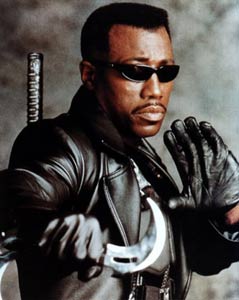
Wesley Snipes surrenders


The judge said it was time: "The defendant Snipes had a fair trial; he has had a full, fair and thorough review of his conviction and sentence. ... The time has come for the judgment to be enforced," the judge wrote in his 16-page decision.

From Bop.gov: 1. WESLEY TRENT SNIPES 43355-018 48-Black-M UNKNOWN IN TRANSIT

Baby steps

The 9th Circuit will air the Prop 8 case on TV!

According to SCOTUSBlog:

The Ninth Circuit Court agreed on Wednesday to allow live and delayed broadcasting of the Dec. 6 oral argument on the constitutionality of Proposition 8 — California’s ban on same-sex marriage. In a brief order, the Court cleared live broadcasting by C-SPAN, the cable network. It also gave permission to a San Francisco station, KGO-TV, an ABC affiliate, to provide coverage.

It's something at least. HT: BL

Judge Camp is going to plead guilty today. I'll post the plea agreement as soon as it's public. The Times Herald reports:

Senior U.S. District Judge Jack Camp is scheduled to enter a plea of guilty today in federal court on two misdemeanor counts and one count of aiding and abetting another’s drug possession, according to Newnan attorney Michael Kam, one of the attorneys representing Camp.

What do you think is a fair sentence?

Thursday, November 18, 2010

"It's quite clear, we don't have a Facebook page."

That was Justice Breyer at a speech yesterday. More:

If I'm applying the First Amendment, I have to apply it to a world where there's an Internet, and there's Facebook, and there are movies like ... 'The Social Network,' which I couldn't even understand," he said.
Oy.

It doesn't get better:

Although Breyer was making a point about judicial philosophy, he also touched on the court's sometimes limited grasp of technological developments. For example, Chief Justice John Roberts in a public employee privacy case before the court earlier this year tried to figure out the role of a text-messaging service in enabling an exchange between two people.

"I thought, you know, you push a button; it goes right to the other thing," Roberts said. Responded Justice Antonin Scalia: "You mean it doesn't go right to the other thing?"

And in a recent case dealing with a California law regulating the sale or rental of violent video games to children, Justice Anthony Kennedy pressed a skeptical state lawyer on whether the v-chip blocking device, rather than a state law, could be used to keep children away from the games.

"V-chips won't work?" Kennedy asked, before the lawyer politely explained they are limited to television programming.

I do agree with Breyer here:

Breyer said he disagrees with those who argue that originalism is "a good system because it will keep the subjective impulses of the judge under control."

"If you want to have history solve everything, let's get nine historians and not nine judges," Breyer said. "And you'll discover that the nine historians are fighting about the various points on which these cases turn anyway."


Adam Liptak from the NY Times has an interesting article today about how vague Supreme Court opinions are and how lower courts are struggling trying to figure them out. Here's a passage from the article dealing with the text messaging case:

In the privacy case that infuriated Justice Scalia and mystified Judge Hull, City of Ontario v. Quon, the Supreme Court ruled that a California police department had not violated the constitutional privacy rights of a member of a SWAT team when it audited the text messages on a pager the city had issued him.

Justice Kennedy took the unusual step of accepting three important points in the case only for the sake of argument, and he spent much of his opinion explaining that the court had taken pains to decide as little as possible.

“Cellphone and text message communications are so pervasive that some persons may consider them to be essential means or necessary instruments for self-expression, even self-identification,” Justice Kennedy went on. “On the other hand, the ubiquity of those devices has made them generally affordable, so one could counter that employees who need cellphones or similar devices for personal matters can purchase and pay for their own.”

Given that, he said, the case should be decided on grounds so narrow that the decision would have almost no precedential effect. “The judiciary risks error by elaborating too fully on the Fourth Amendment implications of emerging technology before its role in society has become clear,” he wrote.

In his concurrence, Justice Scalia decried this approach.

“Applying the Fourth Amendment to new technologies may sometimes be difficult, but when it is necessary to decide a case, we have no choice,” he wrote. “The-times-they-are-a-changin’ is a feeble excuse for disregard of duty.”

Many scholars say there is an important place in Supreme Court jurisprudence for incremental rulings, purposeful ambiguity and the delegation of discretion to lower court judges.

“If the goal is to clear up any conflict in the lower court opinions, then you may want a clearer opinion,” Professor Spriggs said. “But a real bright line may create some injustices in the system.”