Stories around town today:
1. Kenneth Welt, the receiver appointed to oversee Lewis Freeman's business, was sued by his brother who asked that Welt's business be put in receivership. (via DBR).
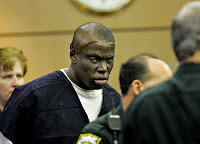
2. Don Diego pleads to 45 years (via Miami Herald). (I thought the Colombian extradition treaty limited potential penalties to 30 years...)
3. The Broward corruption probe is expanding quickly (via Sun-Sentinel).
4. And details are emerging on the undercover agent who worked on the case (via Miami Herald).

The SDFLA Blog is dedicated to providing news and notes regarding federal practice in the Southern District of Florida. The New Times calls the blog "the definitive source on South Florida's federal court system." All tips on court happenings are welcome and will remain anonymous. Please email David Markus at dmarkus@markuslaw.com
Thursday, October 22, 2009

Tuesday, October 20, 2009
What is taking so long?

Well, we still don't have any word on our next judge or U.S. Attorney. What could be taking so long? Here's an interesting article from the Washington Post, "Obama Criticized as Too Cautious, Slow on Judicial Posts." Some excerpts:
President Obama has not made significant progress in his plan to infuse federal courts with a new cadre of judges, and liberal activists are beginning to blame his administration for moving too tentatively on what they consider a key priority.
During his first nine months in office, Obama has won confirmation in the Democratic-controlled Senate for just three of his 23 nominations for federal judgeships, largely because Republicans have used anonymous holds and filibuster threats to slow the proceedings to a crawl.
But some Democrats attribute that GOP success partly to the administration's reluctance to fight, arguing that Obama's emphasis on easing partisan rancor over judgeships has backfired and only emboldened Senate Republicans. Some Republicans contend that the White House has hurt itself by its slow pace in sending over nominations for Senate consideration. President George W. Bush sent 95 names to the Senate in the same period that Obama has forwarded 23....
The delays are having a ripple effect in federal courts, where caseloads continue to back up, said Senate Judiciary Chairman Patrick J. Leahy (D-Vt.). Currently, about 90 judicial seats -- about 10 percent of the total -- remain vacant in appeals and district courts.
The White House predicts that nominations and confirmations will pick up soon. "The administration has been working closely with members of Congress to identify a set of uniquely qualified judicial nominees with diverse professional experiences," said Ben LaBolt, an Obama spokesman. "This process has been bipartisan and we have made every effort to make confirmation wars a thing of the past."
But liberal activists argue that Obama needs to quicken the pace, partly for political reasons. "It is incumbent on the Democrats and the White House to push as hard as they can to confirm judicial nominees, given that next year Republicans will make an all-out effort to block candidates as a means to gin up their base before the election," said Nan Aron, president of the Alliance for Justice, an advocacy organization.
Analysts say that unlike Bush, who saw judicial appointments as a way to advance a strict view of the Constitution, Obama has not sharply defined his judicial philosophy. Eric Posner, a professor at the University of Chicago Law School, said that Republicans consider the federal courts crucial to furthering their policy aims by overturning current law, but that Obama is among Democrats who view court appointments mainly as a means of defending the legal status quo.
The State system on the other hand is chugging along. John Kastrenakes was sworn in last Friday by Judge Moreno. Grey Tesh has all the details here, including speeches by Ryon McCabe, Judge O'Sullivan, Andrew Lourie and Michael Cornely.
Sunday, October 18, 2009
Snitching ain't easy
Lots of interesting reading on this beautiful Sunday. The Sun-Sentinel has a couple of interesting stories on snitching:

"Sheila is for Sheila is for Sheila," said Bill Colon, who served two terms as a Sunrise commissioner in the 1980s. "A lot of people will believe that she betrayed their trust."Marvin Langendorf, a Sunrise resident and City Hall gadfly, applauded her courage."There's too much graft going on and no one ever does anything about it," Langendorf said. "People say they can't trust her. But if you don't do anything wrong, you don't have anything to worry about."Those who are not involved in politics likely admire Alu for having the courage to take on an undercover role without training, said Lance deHaven-Smith, a political science professor at Florida State University."If you told your average citizen, 'Other politicians don't trust her,' that would be an endorsement," he said.Call her a snitch or a rat, and Alu has this retort: "I wear that badge with honor."
"Unlike any gangs I've seen before, they stick together," said the gang detective.On June 26, 2008, detectives in "Operation Deep Six" moved in to take down Top 6. Backed by a grand jury indictment that alleged 91 crimes, SWAT teams from three police agencies raided six homes simultaneously.Detectives tracked down the Top 6 leaders, arresting all 12 within a few weeks.Faced with racketeering charges that could put them in prison for up to 30 years, Top 6's leaders cracked.Jessee Thomas and Ernst Exavier were convicted but got reduced sentences for agreeing to testify against their cohorts. Top 6's leader, Futo Charles, also has agreed to cooperate."I know for me to work it down, I have to be 100% truthful about your questions and about my answers or the deal is off," Charles wrote to prosecutors. "I'm willing to do just that."After at least 20 murders, hundreds of shootings and scores of robberies, burglaries and attacks, Top 6 effectively has been silenced. Palm Beach County is safer today because of it, said police officials and prosecutors."We have seen a real drop in crime," said William Shepherd, Florida's statewide prosecutor. "Which is lives. It's not just numbers on the page."
Friday, October 16, 2009
FBA dinner tonight at the Biltmore
See you all there.
FRIDAY AFTERNOON UPDATE -- Breaking: Lewis Freeman's practice placed into receivership. Receiver -- Ken Welt.
FRIDAY AFTERNOON UPDATE -- Breaking: Lewis Freeman's practice placed into receivership. Receiver -- Ken Welt.
Thursday, October 15, 2009
Robe-itis?
There's been a bunch of funny exchanges this week in the Supreme Court. One tipster sent this one from the attorney's fees case:
CHIEF JUSTICE ROBERTS: Maybe we have a different perspective. You think the lawyers are responsible for a good result and I think the judges are.
(Laughter.)
MR. CLEMENT: And maybe your perspective's changed, Your Honor.
(Laughter.)
I think most lawyers think that the best judges are the ones that remember what it was like to practice....
While we're off topic, let's take a look at Rick Bascuas' entertaining blog, where he claims that Obi Wan was the hero of Star Wars. Rick, what about Han Solo? R2-D2? Come on...
And as we stray even more off-topic: any Gleeks out there?
CHIEF JUSTICE ROBERTS: Maybe we have a different perspective. You think the lawyers are responsible for a good result and I think the judges are.
(Laughter.)
MR. CLEMENT: And maybe your perspective's changed, Your Honor.
(Laughter.)
I think most lawyers think that the best judges are the ones that remember what it was like to practice....
While we're off topic, let's take a look at Rick Bascuas' entertaining blog, where he claims that Obi Wan was the hero of Star Wars. Rick, what about Han Solo? R2-D2? Come on...
And as we stray even more off-topic: any Gleeks out there?
Wednesday, October 14, 2009
Judge Seitz case goes to Supreme Court
Yesterday the Supreme Court granted cert in Holland v. Florida, which presents the following question:
Whether the Eleventh Circuit erred in denying equitable tolling to the defendant to excuse his late filing of his habeas petition, based on the conclusion that the late filing was due to “gross negligence” of counsel, while factors beyond “gross negligence” are required for equitable tolling; whether equitable tolling is available to toll the statute of limitation under the AEDPA.
Here's the 11th Circuit opinion. And here's Todd Scher's cert petition. Congrats to Scher for this amazing opportunity. He was appointed CJA and continued to fight for his client, filing a cert petition after the losing before Judge Seitz and the 11th. Getting cert on a habeas case from the indigent docket is almost impossible, so well done!
Whether the Eleventh Circuit erred in denying equitable tolling to the defendant to excuse his late filing of his habeas petition, based on the conclusion that the late filing was due to “gross negligence” of counsel, while factors beyond “gross negligence” are required for equitable tolling; whether equitable tolling is available to toll the statute of limitation under the AEDPA.
Here's the 11th Circuit opinion. And here's Todd Scher's cert petition. Congrats to Scher for this amazing opportunity. He was appointed CJA and continued to fight for his client, filing a cert petition after the losing before Judge Seitz and the 11th. Getting cert on a habeas case from the indigent docket is almost impossible, so well done!
Tuesday, October 13, 2009
Cuban spy resentenced
Antonio Guerrero, who was originally sentenced to life, was just resentenced to almost 22 years in prison by Judge Lenard after the case was remanded by the 11th Circuit. The parties had agreed to 20 years in prison, but Judge Lenard found that the case warranted a higher sentence.
Here's the Herald coverage and the AP.
Guerrero has about 11 more years to go, but that's a whole lot better than life. Two other spies will have their resentencings soon.
Prior blog coverage here.
Interestingly, the Supreme Court granted cert in Jeff Skilling's case today, which raises a similar issue to that of the Cuban 5 -- can "searing media attacks" taint a criminal trial. The case also raises questions about the honest services statute, which the New York Times highlighted today in the Conrad Black case.
I like this parenthetical in the article:
(The appeals court decision affirming Mr. Black’s conviction, by Judge Richard A. Posner of the United States Court of Appeals for the Seventh Circuit, in Chicago, contained perhaps the best judicial digression of 2008. Discussing a so-called ostrich jury instruction, Judge Posner paused to say that ostriches do not in fact bury their heads in the sand. “It is pure legend and a canard on a very distinguished bird,” he wrote.)
Alrighty then.
Alrighty then.

Monday, October 12, 2009
Columbus Day edition
What a strange day -- courts are closed, but schools are open. It only took 10 minutes to get downtown on US1... Apparently, the DBR didn't take the day off. All kinds of fun stuff today, including Vanessa Blum's story on billing rates and her awesome video report:
There's also a story securities cases, which SFL likes because of the new Scott Dimond photo.
And John Pacenti dials in on UBS account holders seeking amnesty.
Jay Weaver at the Herald was busy this weekend on Alan Mendelsohn and Helio Castroneves.
Canes are #9... Dolphins will beat the Jets tonight. And the blog fantasy team racked up a win. And that's your Columbus day edition.
There's also a story securities cases, which SFL likes because of the new Scott Dimond photo.
And John Pacenti dials in on UBS account holders seeking amnesty.
Jay Weaver at the Herald was busy this weekend on Alan Mendelsohn and Helio Castroneves.
Canes are #9... Dolphins will beat the Jets tonight. And the blog fantasy team racked up a win. And that's your Columbus day edition.
Friday, October 09, 2009
FBI raids Lewis Freeman's office
John Pacenti breaks the story here. It may be over parking:
The FBI executed search warrants at the offices of high-profile accountant and attorney Lewis Freeman, who frequently is picked by judges as a court-appointed receiver or trustee for troubled companies in South Florida, sources said. Freeman and the FBI weren’t talking Thursday when asked about the warrants, which sources said were executed late last week. Legal community sources said the Miami and Plantation offices of Lewis B. Freeman & Partners were searched by the FBI. The search warrants are the latest incarnation of Freeman’s troubles with the U.S. government. Freeman sued the Internal Revenue Service in August over $4.5 million civil assessment against him for allegedly promoting a parking deduction plan that the agency called an abusive tax shelter, according to court documents. The FBI’s presence, however, indicates a criminal investigation may be under way, observers said. “When the IRS assesses someone a penalty, it’s not normal to raid an office,” said Fort Lauderdale tax litigator Martin Press, a partner with Gunster. The IRS typically uses the Treasury Department to execute its search warrants. The FBI is part of the Justice Department. The dapper Freeman is considered an expert on receiverships and speaks nationally on the topic. Information about the warrants remains sealed because criminal charges have not been filed against Freeman, a source said.
In Middle District news, Judge Gregory Presmell had this to say about the lawsuit to allow Segways in the Magic Kingdom: "Although some individuals may, with good reason, not want to use those [wheelchairs and scooters] and instead prefer to use a Seqway, that preference -- standing alone -- is not essential to accessing Disney's parks." Ahhh, judicial humor... standing alone... Presnell is the judge who has ordered litigants to play rock-paper-scissors to settle disputes and recently red-lined a lawyer's pleading.
The FBI executed search warrants at the offices of high-profile accountant and attorney Lewis Freeman, who frequently is picked by judges as a court-appointed receiver or trustee for troubled companies in South Florida, sources said. Freeman and the FBI weren’t talking Thursday when asked about the warrants, which sources said were executed late last week. Legal community sources said the Miami and Plantation offices of Lewis B. Freeman & Partners were searched by the FBI. The search warrants are the latest incarnation of Freeman’s troubles with the U.S. government. Freeman sued the Internal Revenue Service in August over $4.5 million civil assessment against him for allegedly promoting a parking deduction plan that the agency called an abusive tax shelter, according to court documents. The FBI’s presence, however, indicates a criminal investigation may be under way, observers said. “When the IRS assesses someone a penalty, it’s not normal to raid an office,” said Fort Lauderdale tax litigator Martin Press, a partner with Gunster. The IRS typically uses the Treasury Department to execute its search warrants. The FBI is part of the Justice Department. The dapper Freeman is considered an expert on receiverships and speaks nationally on the topic. Information about the warrants remains sealed because criminal charges have not been filed against Freeman, a source said.
In Middle District news, Judge Gregory Presmell had this to say about the lawsuit to allow Segways in the Magic Kingdom: "Although some individuals may, with good reason, not want to use those [wheelchairs and scooters] and instead prefer to use a Seqway, that preference -- standing alone -- is not essential to accessing Disney's parks." Ahhh, judicial humor... standing alone... Presnell is the judge who has ordered litigants to play rock-paper-scissors to settle disputes and recently red-lined a lawyer's pleading.
Thursday, October 08, 2009
The defendant “should not be a casualty of the chaos in Mexico.”
That was Hector Flores in the New York Times today, speaking for his client -- a former federal ICE agent, Richard P. Cramer. From the Times:
According to the complaint, on a number of occasions Mr. Cramer used his position to search federal databases and a California state database to see if certain unidentified drug trafficking organization members were informants for American law enforcement.
The complaint says he passed that information along to his cartel handlers, charging $2,000 for one D.E.A. document, as well as information on how federal agents conduct drug investigations and recruit informants.
Mr. Cramer, the complaint said, at one point invested $40,000 in a 2007 plot to smuggle 660 pounds of cocaine to Spain from Panama, passing through United States seaports.
The load was seized, and that turn of events set off a dispute involving Mr. Cramer, a drug lord and lower-level traffickers that included a hunt for informants, according to the complaint.
The drug agency last August arrested an unidentified participant in the plot who, along with other confidential sources, provided information that culminated in Mr. Cramer’s arrest.
According to the complaint, on a number of occasions Mr. Cramer used his position to search federal databases and a California state database to see if certain unidentified drug trafficking organization members were informants for American law enforcement.
The complaint says he passed that information along to his cartel handlers, charging $2,000 for one D.E.A. document, as well as information on how federal agents conduct drug investigations and recruit informants.
Mr. Cramer, the complaint said, at one point invested $40,000 in a 2007 plot to smuggle 660 pounds of cocaine to Spain from Panama, passing through United States seaports.
The load was seized, and that turn of events set off a dispute involving Mr. Cramer, a drug lord and lower-level traffickers that included a hunt for informants, according to the complaint.
The drug agency last August arrested an unidentified participant in the plot who, along with other confidential sources, provided information that culminated in Mr. Cramer’s arrest.
Tuesday, October 06, 2009
Oral arguments at the Supreme Court
So I snuck out a bit early from my meeting today and went over to the Supreme Court. I sat in the attorney room for the tail end of the Stevens case, which addressed whether the First Amendment trumped the statute prohibiting the sale of depictions of animal cruelty. From what I heard, the case will be 8-1 in favor of the criminal defendant Stevens, holding that Section 48 -- prohibiting the sale of depictions of animal cruelty -- is unconstitutional. The one Justice that seemed to say that Congress could pass such a statute was Alito.
Then I actually got into the courtroom and saw the oral argument in Johnson v. United States, a sentencing case from the Eleventh Circuit addressing whether under the federal Armed Career Criminal Act a prior state conviction for battery is in all cases a “violent felony,” even when the state held that offense does not have as an element the use or threatened use of physical force.
It's amazing how close they let members of the Supreme Court bar sit to the Justices. It's like sitting in the front section of the movie theatre before the stadium seating starts. Very close. In this case Justices Scalia and Breyer were going at it. Scalia was clearly in favor of the criminal defendant and Breyer was clearly against. It will be a close case, probably 5-4... I would bet in favor of the defendant. Scalia used a hypo that made everyone laugh -- he asked whether if he told the government lawyer to shut up or he would flick her with his index finger, then would he be committing a violent felony. The government lawyer said yes... Any unwanted touching counted. Scalia didn't agree. Sotomayor was also an active questioner. Breyer kept asking about the "mine run" case, which sounded weird after the 4th or 5th time he used that term. He also took a jab at Scalia, saying if one were to read the legislative history of the statute, which some of his colleagues didn't do, it would be clear that Congress intended to cover this conduct. Chief Justice Roberts said that Congress could have been clearer and used the word battery if it wanted all battery cases covered.
UPDATE -- here's SCOTUSBlog's coverage of the Stevens' case.
Then I actually got into the courtroom and saw the oral argument in Johnson v. United States, a sentencing case from the Eleventh Circuit addressing whether under the federal Armed Career Criminal Act a prior state conviction for battery is in all cases a “violent felony,” even when the state held that offense does not have as an element the use or threatened use of physical force.
It's amazing how close they let members of the Supreme Court bar sit to the Justices. It's like sitting in the front section of the movie theatre before the stadium seating starts. Very close. In this case Justices Scalia and Breyer were going at it. Scalia was clearly in favor of the criminal defendant and Breyer was clearly against. It will be a close case, probably 5-4... I would bet in favor of the defendant. Scalia used a hypo that made everyone laugh -- he asked whether if he told the government lawyer to shut up or he would flick her with his index finger, then would he be committing a violent felony. The government lawyer said yes... Any unwanted touching counted. Scalia didn't agree. Sotomayor was also an active questioner. Breyer kept asking about the "mine run" case, which sounded weird after the 4th or 5th time he used that term. He also took a jab at Scalia, saying if one were to read the legislative history of the statute, which some of his colleagues didn't do, it would be clear that Congress intended to cover this conduct. Chief Justice Roberts said that Congress could have been clearer and used the word battery if it wanted all battery cases covered.
UPDATE -- here's SCOTUSBlog's coverage of the Stevens' case.
PICTURES: 
Monday, October 05, 2009
Supreme Court to hear dogfighting video case
Brian Maloney summarizes Stevens v. United States here. The issue is an interesting one: whether the First Amendment protects videos depicting animal cruelty. The Third Circuit found that the First Amendment did in fact protect such videos. From ScotusBlog:
The en banc Third Circuit overturned Stevens’s conviction, holding that the statute was unconstitutional on its face as a content-based prohibition on protected speech. The court first held that the speech regulated by § 48 is protected under the First Amendment. In its view, only one of the established categories of unprotected speech – child pornography – is even somewhat similar to the speech prohibited under § 48. The Supreme Court’s opinion in New York v. Ferber, holding that child pornography is not protected speech, set forth a number of factors to consider when determining whether to “create” a new category of unprotected speech. Applying these factors to the case at hand, the Third Circuit emphasized that although preventing cruelty to animals is “appealing . . . to our sensibilities,” it is not a compelling governmental interest in the context of free speech. Thus, it held, § 48 fails strict scrutiny because “it serves no compelling government interest, is not narrowly tailored to achieve such an interest, and does not provide the least restrictive means to achieve such an interest.”
I had a similar case involving cockfighting videos, detailed here but the case never got ruled on as we had to voluntarily dismiss the complaint. Shoot, this could have been my ticket to the Supreme Court...
The en banc Third Circuit overturned Stevens’s conviction, holding that the statute was unconstitutional on its face as a content-based prohibition on protected speech. The court first held that the speech regulated by § 48 is protected under the First Amendment. In its view, only one of the established categories of unprotected speech – child pornography – is even somewhat similar to the speech prohibited under § 48. The Supreme Court’s opinion in New York v. Ferber, holding that child pornography is not protected speech, set forth a number of factors to consider when determining whether to “create” a new category of unprotected speech. Applying these factors to the case at hand, the Third Circuit emphasized that although preventing cruelty to animals is “appealing . . . to our sensibilities,” it is not a compelling governmental interest in the context of free speech. Thus, it held, § 48 fails strict scrutiny because “it serves no compelling government interest, is not narrowly tailored to achieve such an interest, and does not provide the least restrictive means to achieve such an interest.”
I had a similar case involving cockfighting videos, detailed here but the case never got ruled on as we had to voluntarily dismiss the complaint. Shoot, this could have been my ticket to the Supreme Court...
First Monday in October
It's that time again, and I'm actually in DC for the day. Unfortunately, I'm not getting over to the Court for the first day of oral arguments this Term.
I'll post if I can get to a laptop later today; if not carry on in the comment section.
Sunday, October 04, 2009
Miami is BACK

And it's not just the Hurricanes.
We've got all kinds of big fraud and corruption cases on the front page of the Herald this Sunday morning. There's Alan Mendelsohn's story, there's the advice given to Allen Stanford by Greenberg Traurig, and there's the investigation into prominent lobbyist Neil Sterling.
Ahhh yes, Miami is back.
Friday, October 02, 2009
Judge Graham is looking for a law clerk...
... to start now! Here's the vacancy posting.
Also check out SFLawyer for good coverage of Judge Jordan's recent dismissal of a case involving a lesbian woman and her children who were not allowed to visit her dying partner's bedside at Jackson. The Herald's story is here. The NYT piece is here.
Also check out SFLawyer for good coverage of Judge Jordan's recent dismissal of a case involving a lesbian woman and her children who were not allowed to visit her dying partner's bedside at Jackson. The Herald's story is here. The NYT piece is here.
Subscribe to:
Posts (Atom)